BAY 11-7082 IκB/IKK inhibitor Suppresses PMA-Induced TNF-α Expression in Breast Cancer Cells
Copy code to add this image to your page
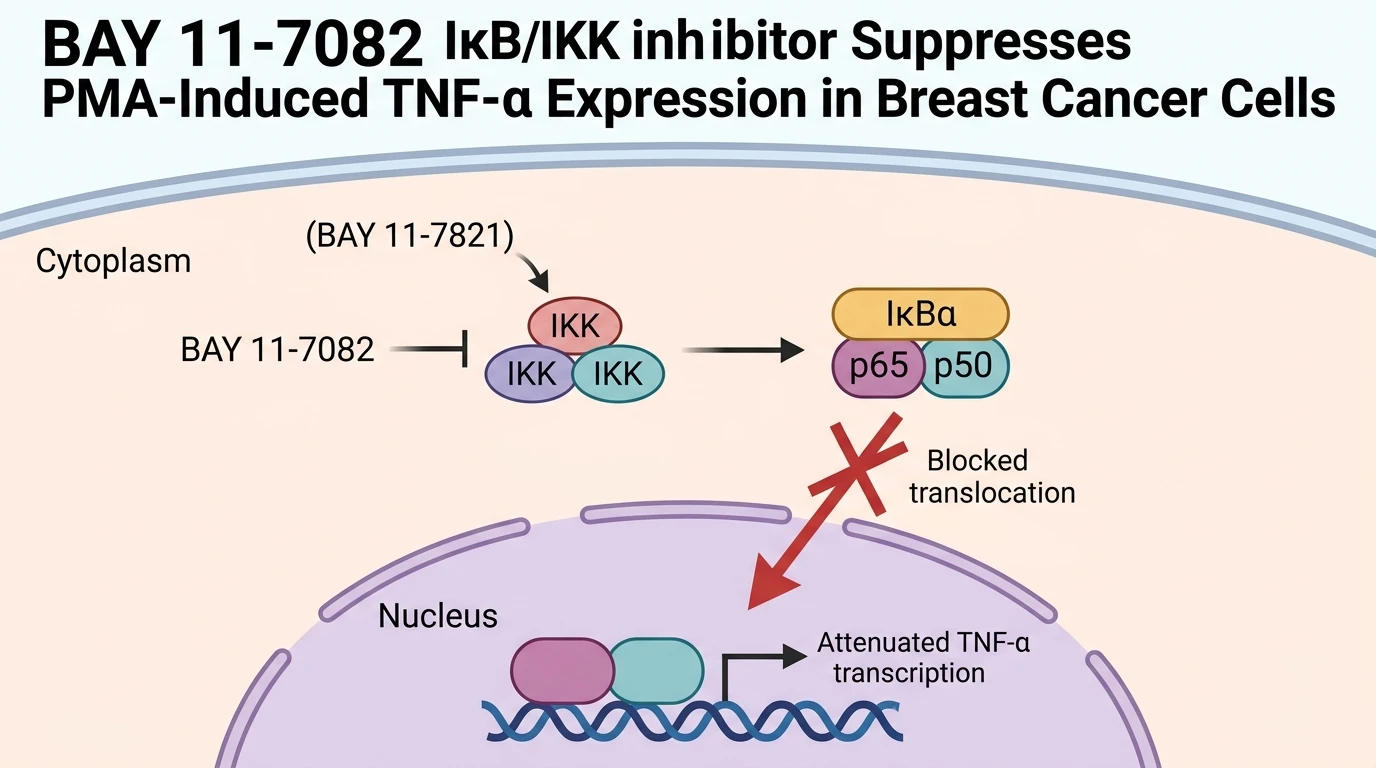
Nuclear Factor Kappa B (NF-κB) serves as a central transcriptional hub controlling immune responses, cellular stress adaptation, and oncogenic signaling cascades. Under resting physiological conditions, the canonical NF-κB heterodimer—composed primarily of p50 and p65 (RelA) subunits—remains sequestered in an inactive cytoplasmic complex through high-affinity association with inhibitor of κB (IκB) proteins, particularly IκBα. Upstream inflammatory stimuli, including phorbol 12-myristate 13-acetate (PMA), pro-inflammatory cytokines, or pathogen-associated molecular patterns, trigger the rapid recruitment and activation of the multi-subunit IκB kinase (IKK) complex. The activated IKK complex phosphorylates serine residues S32 and S36 on IκBα. This phosphorylation event marks IκBα for Lys48-linked polyubiquitination by the SCF^β-TrCP ubiquitin ligase, directing the inhibitor to the 26S proteasome for rapid degradation. Consequent proteasomal clearing liberates the NF-κB p50/p65 complex, exposing its nuclear localization signals. The freed dimer translocates through nuclear pore complexes into the nucleus, binding high-affinity κB consensus elements located within target gene promoters to initiate transcriptional activation of pro-inflammatory cytokines, chemokines, and survival factors.
Pharmacological intervention at the level of the IKK complex offers a direct means to disrupt aberrant downstream transcriptional programs. The small molecule BAY 11-7082 (BAY 11-7821) acts as an irreversible BAY 11-7082 IκB/IKK inhibitor that prevents stimulus-induced IκBα phosphorylation. By alkylating reactive cysteine residues within the catalytic domain of IKK, this compound selectively blocks the kinase activity required to initiate IκBα degradation. In experimental models utilizing PMA-stimulated MCF-7 human breast cancer cells, exposure to BAY 11-7082 (BAY 11-7821) markedly attenuated the downstream canonical signaling cascade. Phorbol ester challenge typically induces robust transcriptional activation of tumor necrosis factor-alpha (TNF-α), driving autocrine inflammatory amplification loops in malignant epithelial cells. Pretreatment with the BAY 11-7082 IκB/IKK inhibitor led to a dose-dependent reduction in PMA-induced TNF-α mRNA transcripts, as quantified by real-time quantitative PCR assays. This transcriptional suppression translated directly to a marked decrease in secreted TNF-α protein levels measured in cell culture supernatants by enzyme-linked immunosorbent assay (ELISA).
To definitively establish whether this reduction in TNF-α expression stemmed specifically from the modulation of canonical NF-κB nuclear activity, subcellular fractionation experiments were conducted in MCF-7 cells. Quantitative immunoblotting of nuclear extracts demonstrated that PMA stimulation prompted a substantial nuclear accumulation of the p65 subunit. Treatment with BAY 11-7082 (BAY 11-7821) markedly attenuated these elevated nuclear p65 levels under identical experimental conditions. Cytoplasmic retention of p65 directly mirrored the preservation of unphosphorylated IκBα levels in the cytosolic fraction. These experimental metrics validate that PMA-mediated TNF-α induction depends on functional NF-κB transactivation in human breast adenocarcinoma models. The findings confirm that direct targeted suppression of IKK activity via BAY 11-7082 effectively isolates the nuclear compartment from upstream oncogenic and inflammatory signals.
The biological consequences of blocking NF-κB nuclear translocation extend beyond TNF-α suppression. Because TNF-α itself functions as a potent upstream activator of NF-κB, suppressing its expression disrupts a positive feedback loop that often sustains chronic inflammatory states in the tumor microenvironment. Under in vitro culture conditions, the inhibition of p65 nuclear accumulation by BAY 11-7082 (BAY 11-7821) provides a clear mechanism for downregulating multiple downstream target genes concurrently. These empirical observations establish the utility of the BAY 11-7082 IκB/IKK inhibitor as a precise chemical tool for dissecting NF-κB-dependent transcriptional networks in breast cancer cellular contexts.
Pharmacological Blockade of Canonical NF-κB Signaling
Copy code to add this image to your page
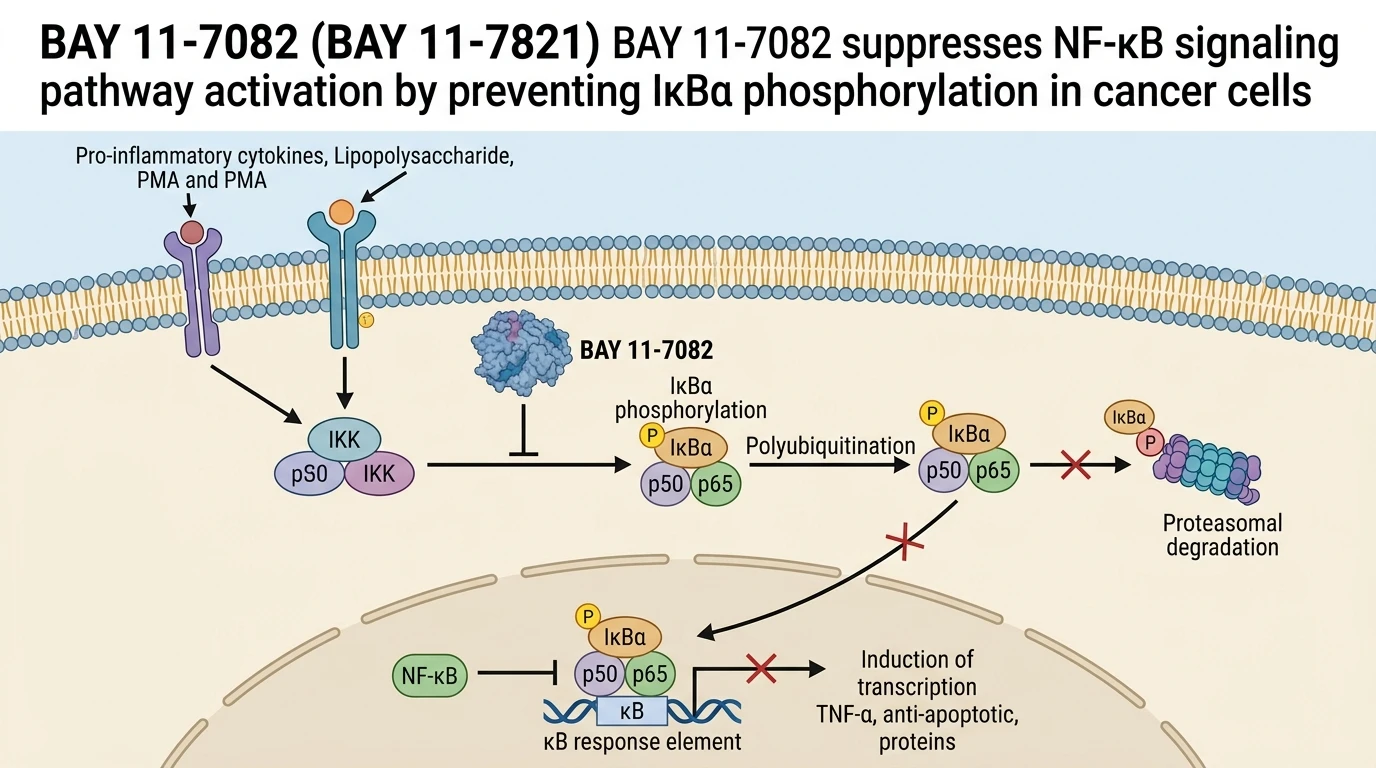
BAY 11-7082 (BAY 11-7821) irreversibly inhibits the IκB kinase (IKK) complex, preventing stimulus-induced phosphorylation and subsequent proteasomal degradation of IκBα. This cytoplasmic retention isolates the NF-κB p50/p65 heterodimer, blocking its translocation into the nucleus. Inhibited nuclear access of p65 prevents binding to κB promoter sites, suppressing downstream transcription and secretion of pro-inflammatory cytokines such as TNF-α in PMA-stimulated human breast cancer cells.
Attenuated p65 Nuclear Translocation Prevents TNF-α Transcription
PMA stimulation recruits cytoplasmic IKK complexes in MCF-7 human breast cancer cells. This enzymatic activation triggers rapid IκBα degradation within minutes. Application of the BAY 11-7082 IκB/IKK inhibitor effectively blocks this upstream phosphorylation cascade. Nuclear fractionation assays demonstrated a significant decrease in nuclear p65 protein accumulation following drug treatment. Reduced nuclear p65 levels directly correlated with a suppression of TNF-α mRNA expression. Quantified cellular transcripts dropped markedly under tested in vitro assay conditions. This transcriptional arrest confirms that TNF-α synthesis relies upon functional NF-κB nuclear engagement in this specific cellular context. Downstream inflammatory protein secretion into culture media decreased accordingly.
Disruption of Inflammatory Feedback Loops in Breast Adenocarcinoma
Autocrine TNF-α signaling sustains chronic NF-κB activation in epithelial malignancies. Pharmacological inhibition by BAY 11-7082 (BAY 11-7821) breaks this self-reinforcing inflammatory loop. Cytoplasmic retention of p65 remains intact even during prolonged PMA exposure. Western blot analysis confirmed sustained cytosolic concentrations of unphosphorylated IκBα across treated groups. Elevated baseline inflammatory signaling collapsed rapidly upon compound administration. These empirical observations highlight the critical role of IKK activity in maintaining secretome-driven tumor phenotypes. In vitro survival assays indicated reduced pro-survival gene transcription following drug exposure.