GSK2879552 Dihydrochloride from Selleck Irreversibly Inhibits LSD1 Demethylase in Leukemic and Solid Tumors
Copy code to add this image to your page
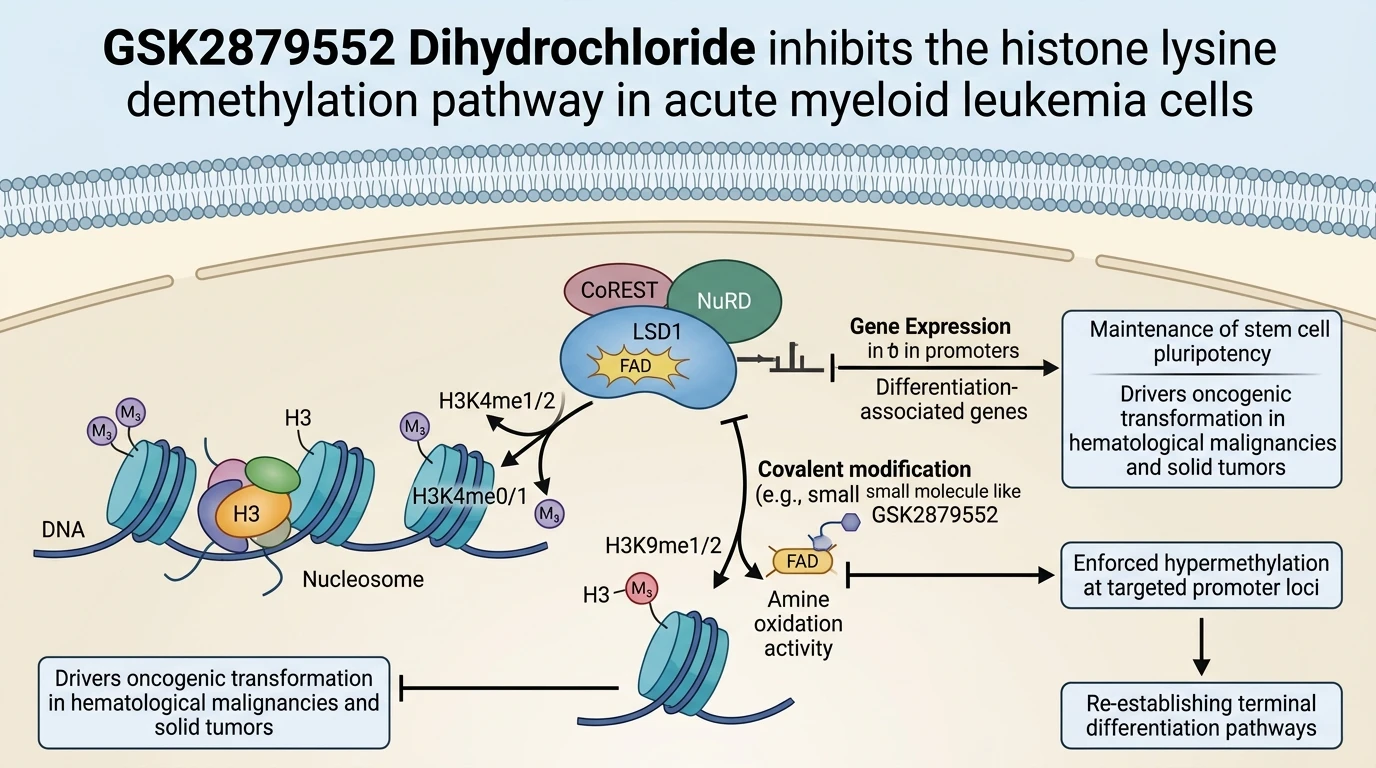
Histone Lysine-Specific Demethylase 1 (LSD1), also designated KDM1A, functions as an essential epigenetic regulator of transcriptomic programming in mammalian development and disease. Catalytically dependent on a flavin adenine dinucleotide (FAD) cofactor, LSD1 selectively removes mono- and di-methyl groups from lysine 4 and lysine 9 on histone H3 (H3K4me1/2 and H3K9me1/2). This enzymatic oxidative cleavage alters local chromatin architecture. Active chromatin states enriched with H3K4 methylation undergo local transcriptional repression upon demethylation. Through physical interactions with scaffolding partners such as REST corepressor 1 (CoREST) and the nucleosome remodeling and deacetylase (NuRD) complex, LSD1 silences lineage-defining genes. Consequently, malignant cells exploit LSD1 activation to maintain stemness and block terminal differentiation pathways, particularly within hematological malignancies and neuroendocrine carcinomas.
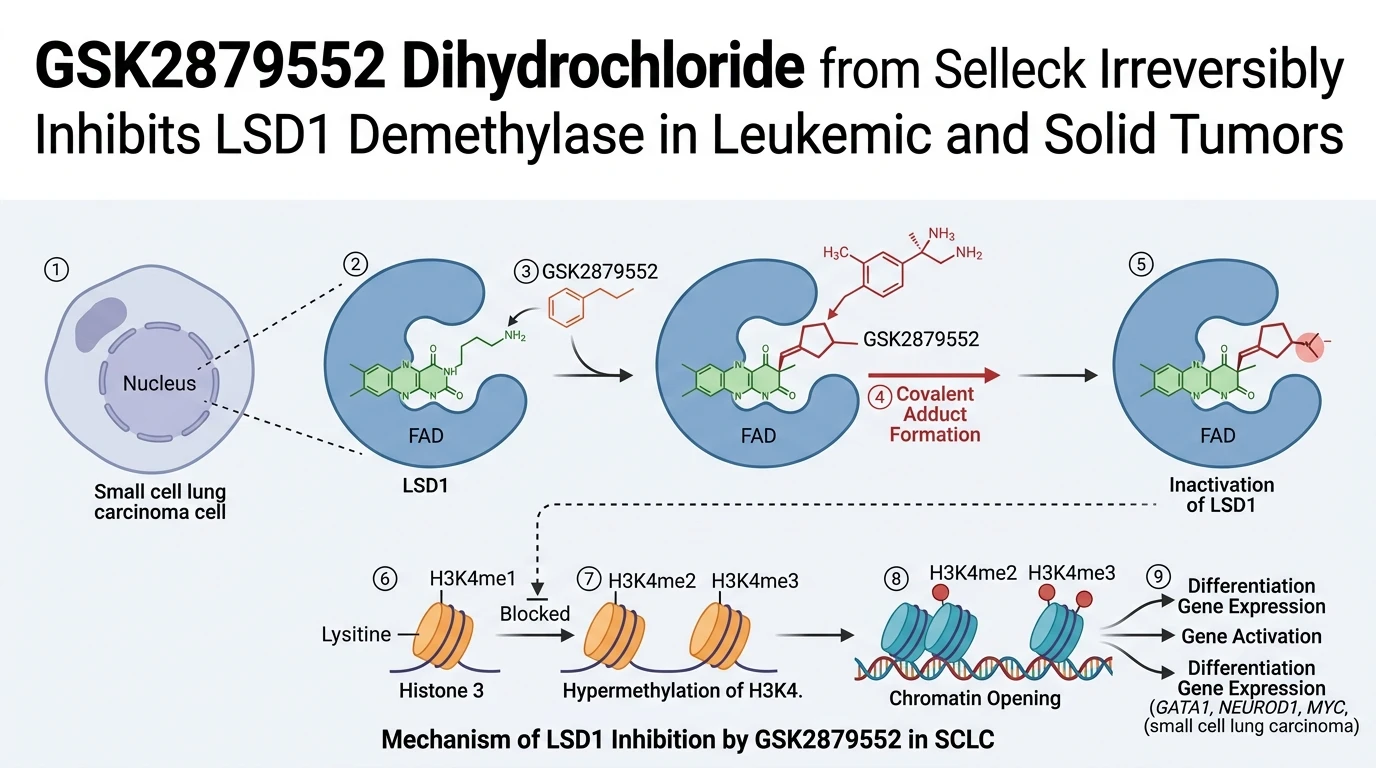
Chemical modification of the classical non-selective monoamine oxidase inhibitor tranylcypromine yielded LSD1 catalytic amine oxidase domain targeted small molecules with elevated potency and selectivity. GSK2879552 Dihydrochloride represents an orally bioavailable, N-alkylated tranylcypromine derivative designed to exploit the catalytic mechanism of LSD1. Biologically active at low nanomolar concentrations, the compound exhibits an enzymatic half-maximal inhibitory concentration (IC50) of 24 nM against purified recombinant human LSD1 under optimized biochemical assay conditions. Mechanism-based inhibition proceeds via a multi-step catalytic cascade. The cyclopropylamine moiety undergoes initial single-electron oxidation by the oxidized FAD prosthetic group inside the catalytic pocket. Subsequent radical rearrangement triggers homolytic ring opening, forming a reactive radical intermediate. Rapid covalent coupling between this intermediate and the isoalloxazine ring of FAD generates a stable five-membered adduct. This irreversible alkylation permanently inactivates the cofactor, terminating catalytic turnover.
Cellular response profiles demonstrate marked sensitivity in specific transformed lineages. High-throughput viability assays across extensive cancer cell line panels revealed selective antiproliferative activity concentrated predominantly in acute myeloid leukemia (AML) and small cell lung carcinoma (SCLC) models. Non-targeted cell types maintained normal proliferation rates under equivalent exposure thresholds. In sensitive AML and SCLC cell cultures, exposure to GSK2879552 Dihydrochloride induced progressive accumulation of global H3K4me2 marks at target gene promoters. Transcription of myeloid differentiation markers, including CD11b and GFI1, increased significantly following target engagement. Pharmacological inhibition restored cell differentiation cascades, culminating in apoptotic cell death across transformed populations.
In vivo characterization in preclinical rodent xenografts further illuminated the therapeutic scope and pharmacological constraints of the compound. Daily oral administration of GSK2879552 Dihydrochloride in SCLC xenograft mouse models yielded sustained target engagement and robust suppression of tumor growth. Notably, efficacy in these murine models occurred without severe hematologic toxicities, such as severe thrombocytopenia, which frequently complicates non-selective or lower-affinity tranylcypromine analogs. Pharmacokinetic measurements confirmed adequate oral absorption, systemic exposure, and intracellular target residence time within solid tumor tissue.
Despite compelling preclinical efficacy, clinical translation encountered substantial hurdles. Early-phase human evaluation commenced to assess safety, pharmacokinetics, and preliminary therapeutic responses in patients with relapsed or refractory AML, SCLC, and myelodysplastic syndromes (MDS). Monotherapy and combination cohorts pairing the inhibitor with hypomethylating agents like azacitidine were evaluated. However, these Phase 1/2 clinical trials were terminated prior to completion. Clinical oversight committees concluded that the observed safety profile presented an unfavorable risk/benefit ratio, driven by treatment-emergent adverse events that limited dose escalation.
Although clinical development was halted, the mechanistic insights gained from the compound remain crucial for epigenetic drug design. Mechanistic studies showed that co-treatment with all-trans-retinoic acid (ATRA) synergistically reactivated retinoic acid receptor signaling cascades in non-APL AML subtypes. This synergistic response occurred even at sub-toxic concentrations of the LSD1 inhibitor, indicating that partial catalytic suppression may suffice when combined with orthogonal differentiation agents. High-quality reference compounds remain indispensable tools for dissecting chromatin biology; researchers frequently employ high-purity preparations such as GSK2879552 Dihydrochloride from Selleck to evaluate transient versus permanent histone modification cascades in vitro.
Pharmacological Evaluation and Translating LSD1 Covalent Inhibition
Copy code to add this image to your page
GSK2879552 Dihydrochloride acts as an irreversible inhibitor of LSD1/KDM1A (IC50 = 24 nM). It undergoes single-electron oxidation by the FAD cofactor inside the amine oxidase catalytic domain, triggering cyclopropyl ring opening and covalent adduct formation with FAD. This permanently inactivates LSD1, blocking H3K4 demethylation, restoring transcription of myeloid differentiation genes, and inducing differentiation and apoptosis in acute myeloid leukemia and small cell lung carcinoma cells.
Irreversible Cofactor Alkylation and Chromatin Remodeling Activity
Target engagement by GSK2879552 Dihydrochloride from Selleck relies on mechanism-based covalent modification of the flavin cofactor within the amine oxidase domain. Biochemical kinetics confirm irreversible binding. Enzymatic turnover ceases upon adduct formation. Following enzyme inactivation, global cellular levels of dimethylated histone H3 lysine 4 (H3K4me2) elevate markedly within six hours of exposure in patient-derived AML blast cultures. Chromatin immunoprecipitation sequencing reveals selective enrichment of H3K4me2 at transcription start sites associated with myeloid differentiation genes. Expression of the transcriptional repressor GFI1 decreases rapidly, whereas lineage marker CD11b undergoes progressive up-regulation. Morphological examination confirms neutrophil-like differentiation prior to cell death. In contrast, non-malignant progenitor cells show negligible chromatin alterations under identical dosing regimens. These findings confirm that catalytic suppression directly alters chromatin accessibility in malignant lineages.
Efficacy in SCLC Models and Clinical Risk Profile
In vivo xenograft studies established sustained tumor growth inhibition in small cell lung carcinoma models following oral administration of GSK2879552 Dihydrochloride. Mouse xenograft tumors exhibited dose-dependent volume reduction over a 21-day treatment window. Histological analysis confirmed elevated apoptosis rates within tumor tissues. Systemic tolerability was observed in preclinical models without severe myelosuppression. However, Phase 1/2 clinical trials in patients with AML, SCLC, and myelodysplastic syndromes were prematurely terminated. Systemic exposure in human subjects generated adverse events that altered the expected safety profile. Clinical safety limits restricted systemic exposure below concentrations required for complete tumor regression. Post-hoc analysis indicates that combination strategies with differentiation inducers, such as ATRA, lower required exposure thresholds while preserving anti-leukemic signaling.