GSK1278863 from Selleck Daprodustat Inhibits HIF Prolyl Hydroxylase in Renal Anemia
Copy code to add this image to your page
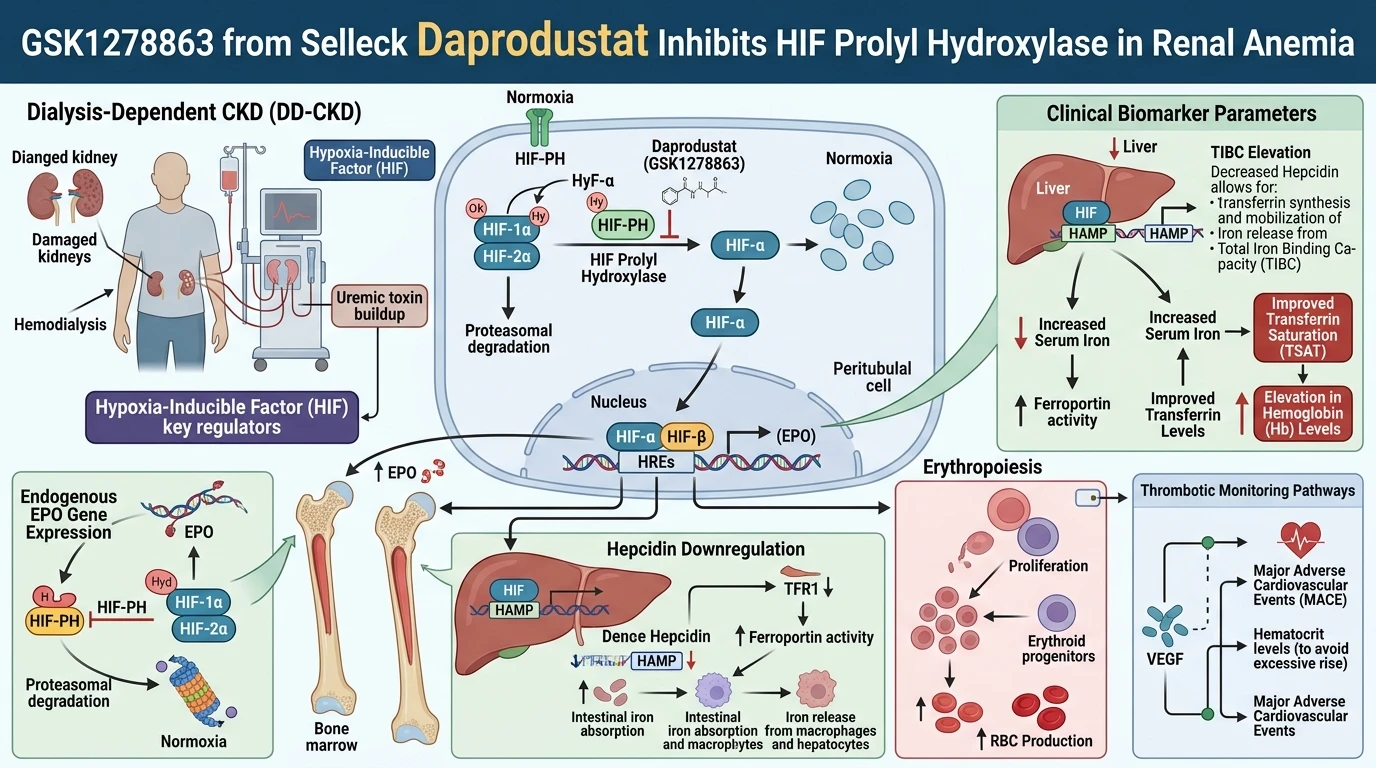
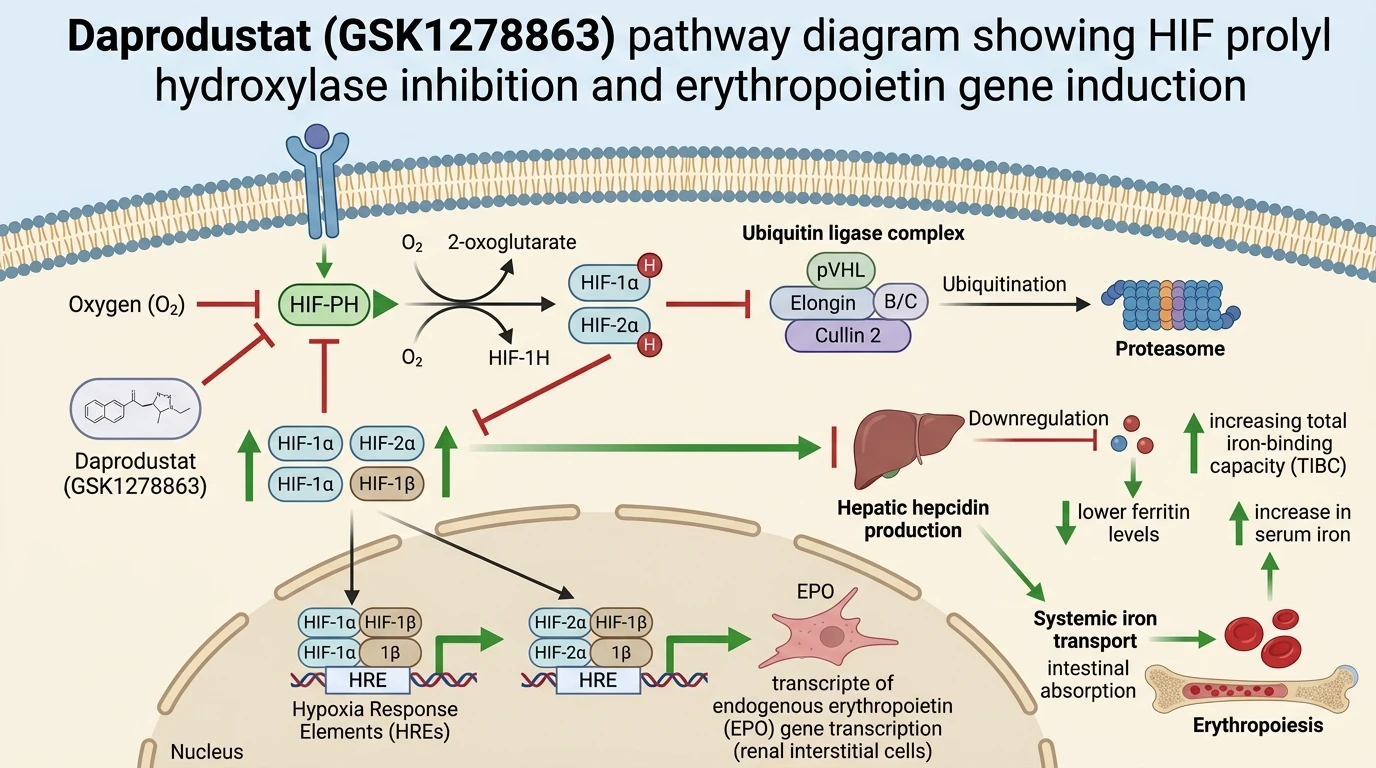
Hypoxia-inducible factor prolyl hydroxylase (HIF-PH) enzymes regulate cellular adaptation to low oxygen tensions through catalytic degradation of HIF-alpha transcription factors. Under normoxic conditions, HIF-PH isoforms hydroxylate specific proline residues on HIF-1alpha and HIF-2alpha, targeting them for von Hippel-Lindau (VHL)-mediated polyubiquitination and subsequent 26S proteasomal degradation. Daprodustat (GSK1278863) operates as a small-molecule HIF prolyl hydroxylase inhibitor (HIF-PHI) that reversibly binds the enzyme active site, preventing HIF-alpha degradation. Research utilizing GSK1278863 from Selleck demonstrates that competitive HIF-PH inhibition stabilizes cytosolic HIF-1alpha and HIF-2alpha, facilitating their heterodimerization with HIF-1beta and subsequent translocation to the nucleus. Inside the nuclear compartment, these active transcription factor complexes bind hypoxia response elements (HREs) in promoter regions of target genes, predominantly activating endogenous erythropoietin (EPO) transcription in renal interstitial peritubular cells.
In dialysis-dependent chronic kidney disease (CKD-DD), progressive loss of functional renal parenchyma severely impairs endogenous EPO biosynthesis, precipitating chronic anemia. A recent network meta-analysis comparing five distinct HIF-PHIs against traditional erythropoiesis-stimulating agents (ESAs) and placebo systematically evaluated the clinical efficacy and safety of Daprodustat in CKD-DD cohorts. Data revealed that Daprodustat achieved statistically significant hemoglobin elevation when compared directly against placebo controls. However, comparative analysis within the class indicated that roxadustat induced a greater magnitude of hemoglobin enhancement than daprodustat in this specific patient population. These findings confirm that while HIF-PH inhibition reliably rescues erythropoiesis, drug-specific pharmacokinetic profiles and catalytic binding kinetics yield distinct pharmacodynamic profiles among class members.
Beyond stimulating renal EPO synthesis, Daprodustat fundamentally remodels systemic iron homeostasis. Functional iron deficiency in CKD-DD is heavily driven by chronic inflammatory states that upregulate hepatic hepcidin, a master regulator peptide that degrades the ferroportin iron exporter. Inhibiting HIF-PH downregulates hepatic hepcidin expression, thereby restoring iron flux into the circulation. Quantitative analysis confirmed that daprodustat administration significantly reduced systemic ferritin and hepcidin levels while markedly increasing total iron-binding capacity (TIBC). This pharmacodynamic shift enhances iron mobilization from reticuloendothelial storage pools and promotes intestinal iron absorption, improving overall iron bioavailability for hemoglobin synthesis without necessitating heavy intravenous iron supplementation.
Despite clear hematologic improvements, safety evaluations revealed critical clinical considerations. The meta-analysis identified a significant association between daprodustat therapy and an elevated risk of thrombotic events compared to conventional ESA regimens, yielding an odds ratio (OR) of 2.52. This heightened thrombotic hazard underscores the necessity of continuous clinical monitoring. Excessive rapidly rising hemoglobin levels or off-target vascular effects mediated by non-erythroid HIF transcriptional targets may contribute to this prothrombotic state. Consequently, routine ferritin monitoring and individualized thrombosis risk assessment are essential clinical prerequisites when implementing daprodustat therapy in dialysis-dependent chronic kidney disease.
Comparative Efficacy and Iron Metabolism Regulation in CKD-DD
Copy code to add this image to your page
Daprodustat (GSK1278863) selectively inhibits HIF prolyl hydroxylase, stabilizing HIF-alpha proteins against proteasomal degradation. Nuclear translocation of HIF-alpha stimulates renal EPO expression and downregulates hepatic hepcidin, elevating TIBC and optimizing iron utilization for erythropoiesis in CKD-DD.
Hemoglobin Enhancement Dynamics Relative to Conventional ESAs
Daprodustat effectively elevates hemoglobin concentrations in dialysis-dependent chronic kidney disease patients. Clinical network meta-analysis data demonstrate robust efficacy over placebo. However, response magnitudes varied across the HIF-PHI drug class. Roxadustat achieved superior hemoglobin increases compared to Daprodustat (GSK1278863). The small molecule GSK1278863 from Selleck acts through transient HIF stabilization. This mechanism avoids the supraphysiological EPO spikes typical of conventional ESAs. Hemoglobin correction occurs at lower circulating EPO concentrations. These quantitative observations highlight subtle class differences in erythropoietic potency.
Iron Parameter Modulation and Hepcidin Downregulation Profile
Functional iron deficiency complicates renal anemia management in dialysis cohorts. Administration of Daprodustat systematically altered clinical iron biomarkers in evaluated patient sets. Suppressed hepatic hepcidin expression permitted uninterrupted ferroportin activity. Serum ferritin levels decreased while total iron-binding capacity increased significantly. This biochemical shift indicates enhanced iron mobilization from tissue stores. Intestinal iron absorption also improved under HIF pathway activation. Systemic iron bioavailability rose without high-dose intravenous iron loading.
Thrombotic Risk Elevation and Biomarker Monitoring Considerations
Safety evaluations revealed a key adverse outcome signal during trial synthesis. Daprodustat therapy was associated with an elevated risk of vascular thrombosis compared with ESAs, demonstrating an odds ratio of 2.52. High-dose target exposure requires cautious titration. Prothrombotic mechanisms may involve rapid hematocrit shifts or altered coagulation factor gene expression. Ferritin levels and iron saturation must be tracked routinely. Risk stratification remains mandatory before initiating treatment in dialysis-dependent patients.