Ricolinostat (ACY-1215) HDAC inhibitor Selective HDAC6 Inhibition in Multiple Myeloma
Copy code to add this image to your page
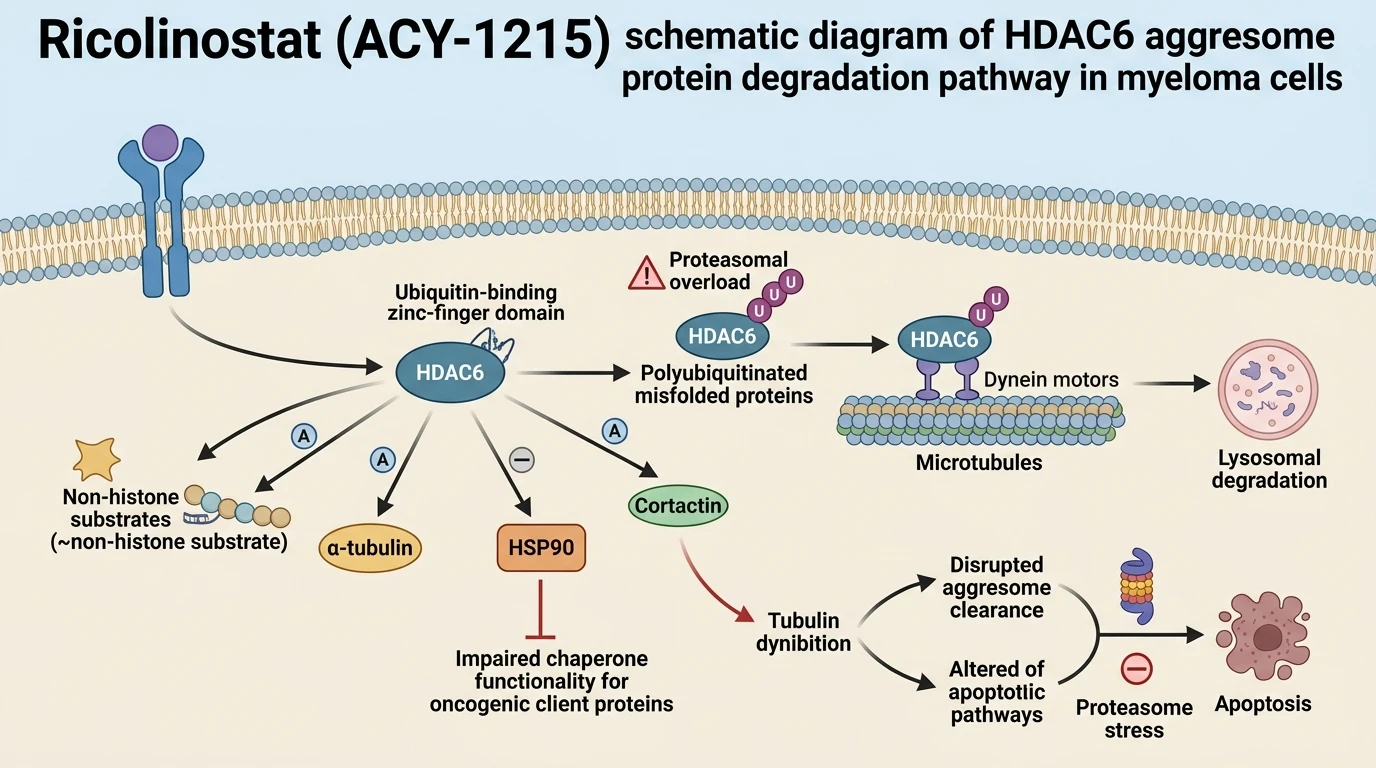
Histone deacetylase 6 (HDAC6) represents a structurally distinct class IIb deacetylase characterized by two functional catalytic domains and a C-terminal zinc-finger ubiquitin-binding domain (ZnF-UBD). Unlike class I HDACs (HDAC1, HDAC2, and HDAC3), which reside predominantly in the nucleus and deacetylate histones to regulate transcriptional chromatin architecture, HDAC6 functions cellularly within the cytoplasm. Substrates for HDAC6 include key non-histone regulatory proteins such as alpha-tubulin, heat shock protein 90 (HSP90), and cortactin. Through its deacetylase catalytic activity and ZnF-UBD domain, HDAC6 orchestrates intracellular protein trafficking, cell motility, aggresome formation, and protein degradation pathways.
In malignant plasma cells, such as those found in multiple myeloma, baseline protein synthesis is abnormally elevated due to the continuous production and secretion of monoclonal immunoglobulins. This excessive protein burden stresses the endoplasmic reticulum, creating heavy reliance on intracellular protein degradation networks to maintain proteostasis. Plasma cells process misfolded and polyubiquitinated proteins via two primary mechanisms: the ubiquitin-proteasome system (UPS) and the autophagic-aggresomal pathway. When proteasomal capacity is saturated or pharmacologically inhibited, polyubiquitinated aggregates accumulate in the cytosol. HDAC6 acts as a molecular adapter in this salvage mechanism by binding polyubiquitinated proteins via its ZnF-UBD and linking them to dynein motor complexes. Dynein then transports these protein complexes along acetylated alpha-tubulin microfilaments toward the microtubule-organizing center, sequestering them into perinuclear aggresomes for lysosomal degradation.
Small molecule inhibition of HDAC6 represents a targeted epigenetic approach to disrupt this crucial survival mechanism in multiple myeloma cells. Ricolinostat (ACY-1215) is a potent, orally available, selective HDAC6 inhibitor engineered to specifically engage the catalytic domains of HDAC6 while demonstrating minimal inhibitory activity against nuclear class I HDAC isoforms. In biochemical enzyme assays, Ricolinostat (ACY-1215) HDAC inhibitor exhibits approximately twelve-fold selectivity for HDAC6 over HDAC1 and HDAC2, significantly sparing histone deacetylation processes. By selectively targeting HDAC6, the compound prevents deacetylase-mediated regulation of alpha-tubulin, resulting in tubulin hyperacetylation without affecting global histone acetylation profiles at therapeutic concentrations.
At the cellular level, engagement of HDAC6 by Ricolinostat (ACY-1215) produces a dual mechanism of proteotoxic stress induction. First, inhibition of HDAC6 catalytic activity impairs dynein motor interaction and halts retrograde transport of polyubiquitinated protein aggregates along microtubules. Consequently, misfolded proteins cannot be sequestered into protective aggresomes, leading to toxic, diffuse cytoplasmic protein accumulation. Second, HDAC6 inhibition impairs the chaperone functionality of HSP90 by maintaining its hyperacetylated state, destabilizing critical client proteins, including the oncogenic transcription factors MYC and IRF4, as well as key cell cycle regulators.
Under physiological assay conditions, HDAC6 deacetylates cortactin to modulate actin filament dynamics, influencing cell motility and cell-cell interactions within the bone marrow niche. Treatment with Ricolinostat (ACY-1215) suppresses osteoclastogenesis and reduces bone resorption factors in primary bone marrow stromal cell co-cultures. In human myeloma bone marrow aspirate samples evaluated ex vivo, treatment with Ricolinostat (ACY-1215) HDAC inhibitor effectively induced apoptosis in CD138-positive malignant plasma cells while sparing CD138-negative non-malignant mononuclear populations. These observations confirm a selective therapeutic window for malignant phenotypes overexpressing protein degradation machinery.
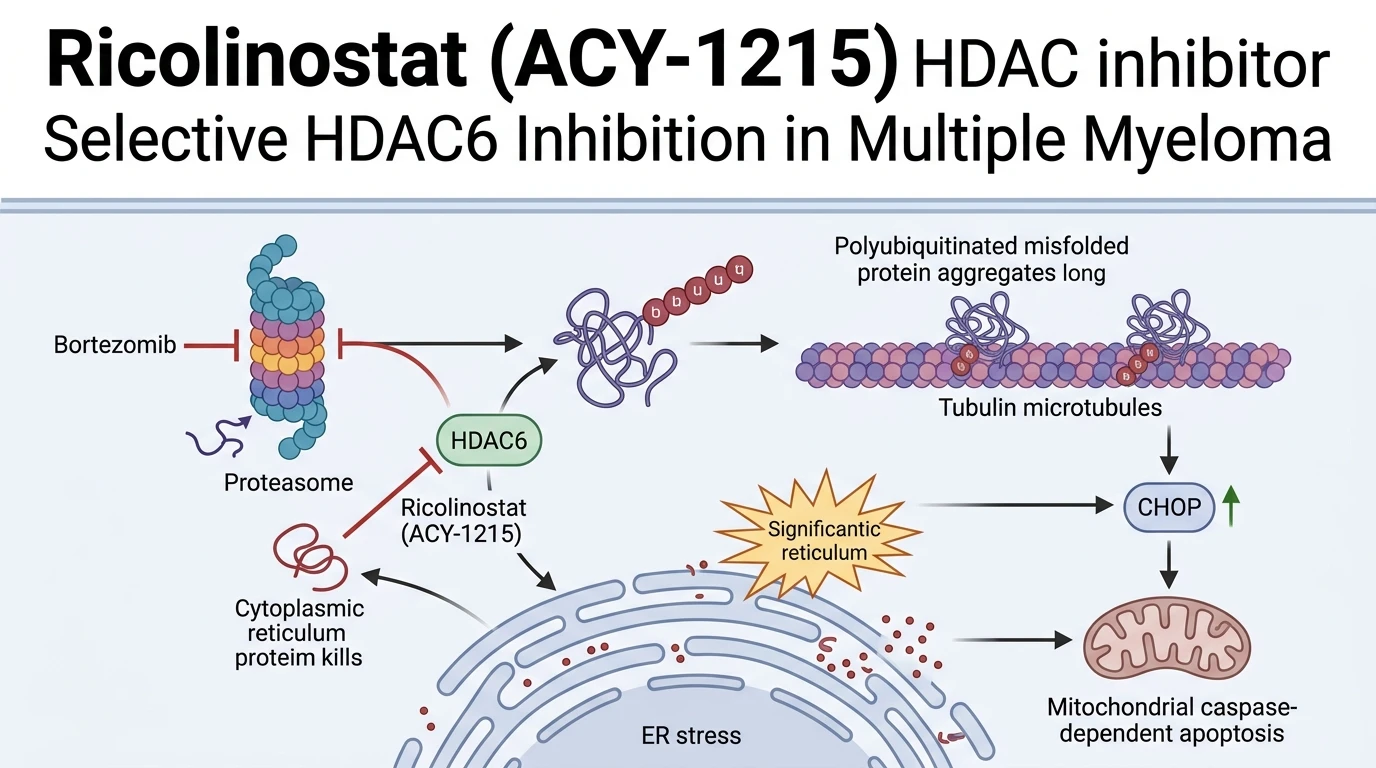
Because single-agent proteasome inhibition with agents like bortezomib causes myeloma cells to upregulate aggresome formation as a compensatory rescue mechanism, combined treatment with Ricolinostat (ACY-1215) creates a complementary, dual-pathway blockade. Simultaneous suppression of proteasomal degradation and aggresomal transport produces synergistic proteotoxic stress. This dual blockade triggers terminal unfolded protein responses (UPR), upregulates the pro-apoptotic transcription factor CCAAT/enhancer-binding protein homologous protein (CHOP), and initiates caspase-dependent cell death cascades. In patient-derived myeloma plasma cell models and murine xenograft systems, this combination therapy restores sensitivity in bortezomib-resistant cell lines and attenuates tumor growth without the severe systemic toxicities—such as severe thrombocytopenia and neutropenia—typically associated with non-selective pan-HDAC inhibitors. Additionally, clinical evaluations indicate that combining HDAC6 inhibition with immunomodulatory drugs (IMiDs) like lenalidomide or pomalidomide further enhances anti-myeloma activity by downregulating critical survival signaling axes and altering the bone marrow microenvironment.
Pharmacological Mechanisms and Combination Efficacy in Myeloma
Copy code to add this image to your page
Ricolinostat (ACY-1215) selectively inhibits HDAC6, leading to hyperacetylation of alpha-tubulin and disruption of dynein-mediated protein transport to aggresomes. In multiple myeloma cells dependent on misfolded protein clearance, HDAC6 inhibition blocks the secondary proteotoxic salvage pathway. When combined with proteasome inhibitors like bortezomib, Ricolinostat induces accumulation of polyubiquitinated protein aggregates, overwhelming endoplasmic reticulum capacity, triggering unfolded protein response signaling, and selectively activating apoptotic cascades in malignant plasma cells.
Targeted HDAC6 Inhibition Accumulates Hyperacetylated Alpha Tubulin
In human multiple myeloma cell lines, the small molecule Ricolinostat (ACY-1215) HDAC inhibitor exhibits over ten-fold selectivity for HDAC6 relative to class I HDAC deacetylase domains. Alpha-tubulin acetylation increased substantially within four hours. By disabling the ubiquitin-binding zinc-finger motif of HDAC6, the compound blocks dynein-dependent retrograde transport of cytotoxic protein aggregates along the microtubule cytoskeleton. Aggresome formation collapsed completely under observation. Because nuclear histone deacetylases remain largely uninhibited at submicromolar doses, clinical trial safety profiles revealed marked reductions in dose-limiting neutropenia. Cellular viability dropped in stress-sensitive populations.
Dual Proteasome Blockade Induces Terminal Endoplasmic Reticulum Stress
Combining HDAC6 inhibition with proteasome inhibitors, such as bortezomib, triggers catastrophic accumulation of polyubiquitinated cytotoxic proteins within patient-derived myeloma plasma cells. Proteotoxic stress mechanisms activated rapidly. Simultaneous impairment of proteasomal degradation and aggresomal salvage pathways forces toxic protein buildup, triggering persistent unfolded protein responses mediated by PERK and IRE1 alpha. Downstream CHOP expression surged within eight hours. In murine xenograft models of relapsed multiple myeloma, combination regimens achieved significant tumor regression compared to monotherapy controls, confirming synthetic lethal vulnerability. Apoptotic caspase-3 cleavage reached maximal intensity.