PT2977 (Belzutifan) HIF inhibitor characterization in hypoxia-inducible factor 2α driven clear cell neoplasia
Copy code to add this image to your page
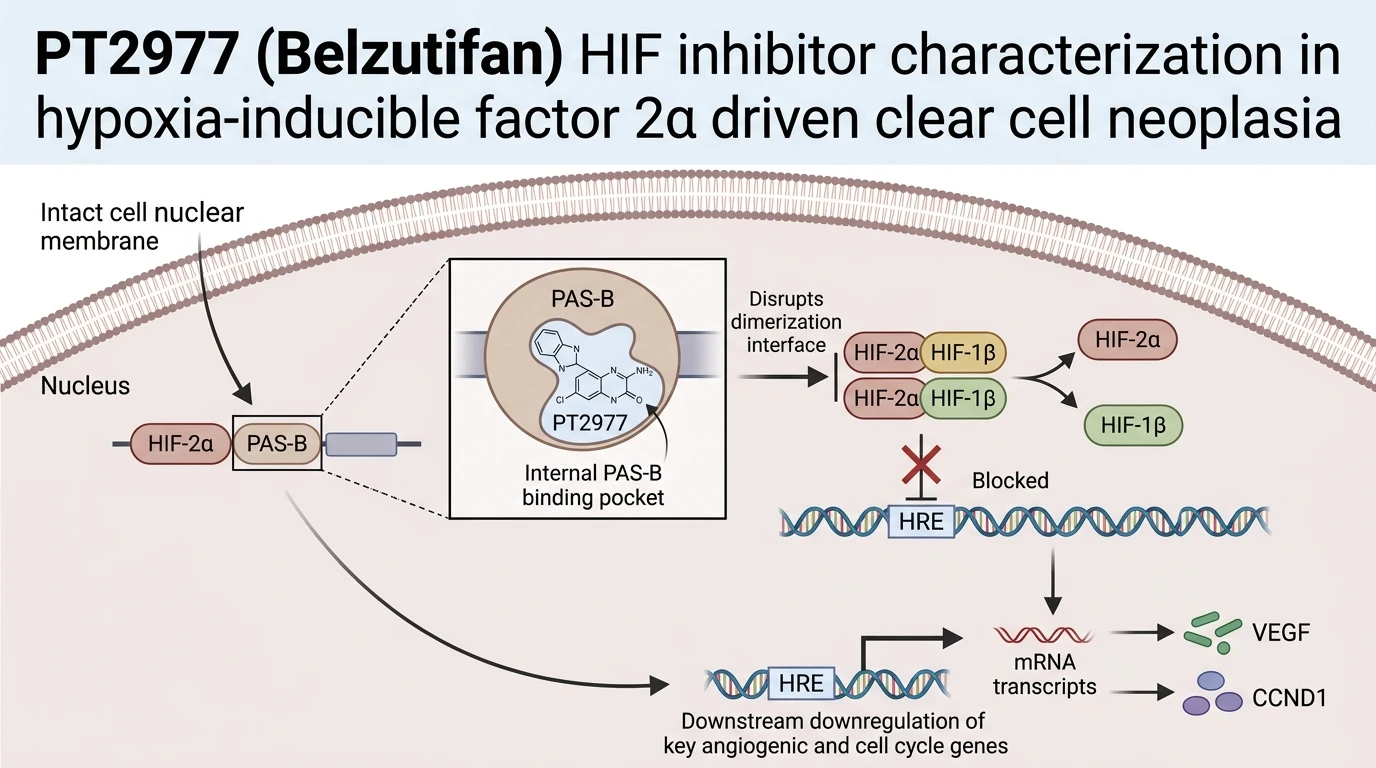
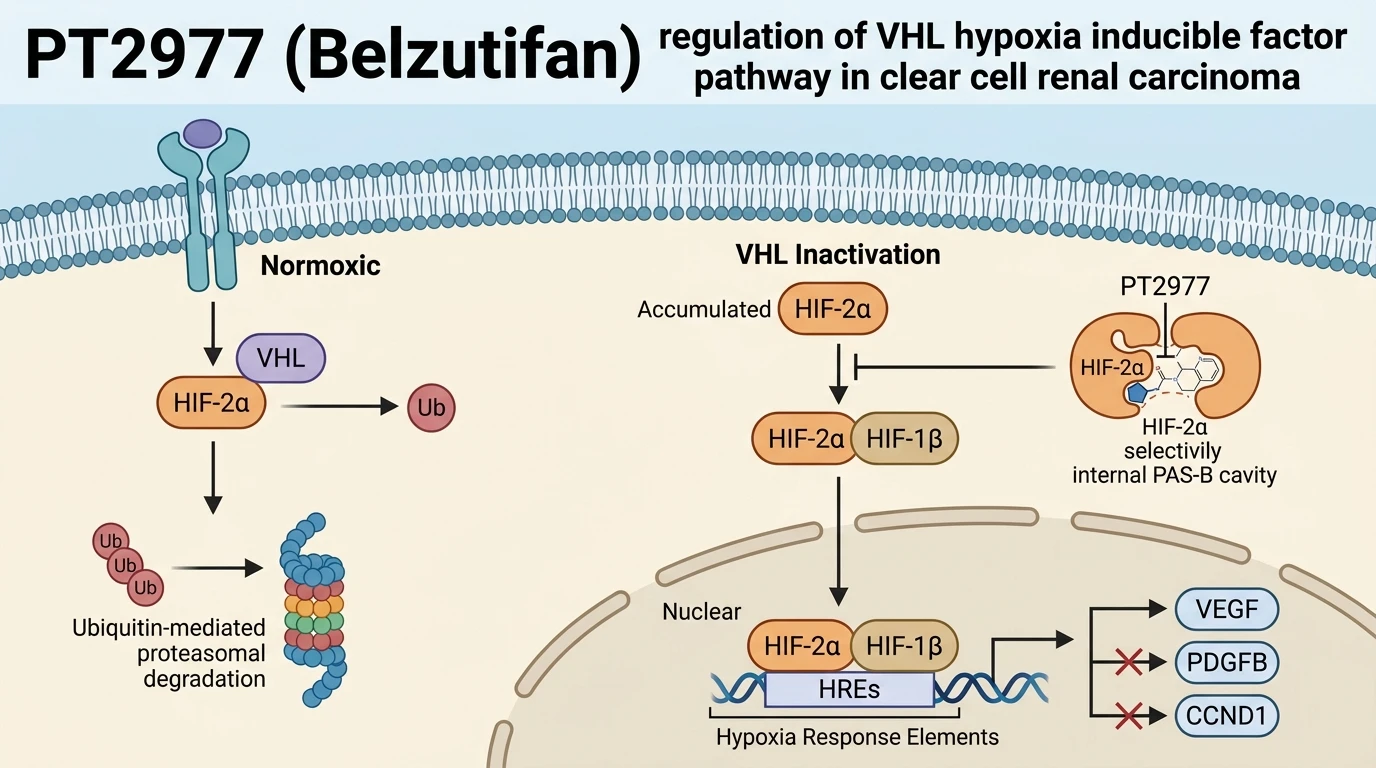
Inactivation of the von Hippel–Lindau (VHL) tumor suppressor gene represents the primary driver in clear cell renal cell carcinoma and associated germline neoplastic syndromes. Loss of functional VHL protein abrogates ubiquitin ligase complex assembly. Consequently, hypoxia-inducible factor 2α (HIF-2α) avoids proline hydroxylation and proteasomal clearance. The stabilized HIF-2α subunit accumulates within the cytoplasm, translocates to the nucleus, and forms an active heterodimeric complex with HIF-1β. This nuclear complex binds specific hypoxia response elements (HRE) across promoter regions. Downstream activation accelerates transcription of vascular endothelial growth factor A (VEGFA), platelet-derived growth factor subunit B (PDGFB), and cyclin D1 (CCND1). Tumor hypervascularity, cellular proliferation, and metabolic adaptation follow.
Direct pharmacological targeted intervention at the transcription factor level was historically deemed unfeasible due to smooth protein-protein contact surfaces. PT2977 (Belzutifan) overcomes this structural limitation by binding a specific internal cavity within the PAS-B domain of HIF-2α. Small-molecule binding induces a conformational change that sterically blocks association with HIF-1β. Disruption of heterodimerization prevents nuclear binding to HRE sites, halting oncogenic transcript production. Unlike broader anti-angiogenic kinase inhibitors, targeting HIF-2α provides selective pathway inhibition specific to VHL-mutated clear cell neoplasms.
To establish formal clinical exposure characteristics, a population pharmacokinetic (PK) model was constructed using data from 239 individuals across five Phase I-III clinical studies. The dataset comprised diverse populations, including healthy volunteers and patient cohorts with advanced solid tumors or VHL-associated lesions. The disposition kinetics of the PT2977 HIF inhibitor were best characterized by a linear two-compartment model featuring first-order oral absorption and first-order systemic elimination. Parameter estimates confirmed rapid oral absorption and consistent clearance profiles over therapeutic dosage intervals.
Evaluation of demographic and intrinsic covariates revealed robust pharmacokinetic stability across clinical subpopulations. Body weight, biological sex, age, and race demonstrated no statistically significant or clinically meaningful impact on steady-state exposure metrics (AUC and Cmax). Furthermore, physiological variations in organ function were systematically examined. Mild-to-moderate renal impairment and mild hepatic impairment altered clearance values only marginally within expected variability thresholds. These empirical findings indicate that routine baseline dosage adjustments based on demographic descriptors or baseline mild organ dysfunction are unwarranted in adult clinical protocols.
Metabolic characterization identified dual pathways involving UGT2B17 glucuronidase activity and CYP2C19-mediated oxidation. A clinical genetic sub-analysis highlighted elevated exposure parameters in individuals classified as dual poor metabolizers for both UGT2B17 and CYP2C19 enzymes. In this targeted genotype subset, observed belzutifan area under the concentration-time curve (AUC) values increased approximately 3.2-fold relative to non-poor metabolizers. Although systemic exposure was elevated, phase clinical trial safety profiles demonstrated manageable tolerability at standard dosing. Consequently, starting dose reductions are not required for dual poor metabolizers, though heightened safety monitoring for class-specific adverse events—specifically anemia and hypoxia—remains clinically prudent.
Compliance and dosing delay management were quantitatively modeled using stochastic simulations. In clinical practice, missed doses present risks of suboptimal target coverage or peak-to-trough variability. Simulation results established that a delayed dose can be administered on the same calendar day as soon as remembered. When the delay approaches the next scheduled daily administration, patients should resume the standard 120-mg regimen without doubling doses. This pharmacokinetic flexibility minimizes target disengagement without precipitating elevated peak exposures associated with dose duplication.
Pharmacokinetic Modeling and Metabolic Exposure Drivers
Copy code to add this image to your page
PT2977 (Belzutifan) functions as a selective, small-molecule inhibitor of hypoxia-inducible factor 2α (HIF-2α). By binding allosterically within the PAS-B domain cavity of HIF-2α, it blocks the protein-protein interaction required for heterodimerization with HIF-1β. This inhibition prevents nuclear transcription factor binding to hypoxia response elements in VHL-deficient tumor cells.
Linear Two-Compartment Kinetics Across Clinical Cohorts
Systemic disposition of belzutifan followed predictable two-compartment parameters in patient populations. Absorption proceeded rapidly following oral administration of the standard 120-mg daily dose. Clearance remained consistent over long-term treatment intervals. Body weight, age, sex, and ethnic background showed no meaningful influence on steady-state area under the curve. Baseline renal function ranging from normal to moderate impairment failed to alter drug clearance profiles. Similarly, mild hepatic impairment produced negligible changes in systemic exposure. Application of the PT2977 HIF inhibitor in diverse patient demographics requires no baseline dose modification based solely on demographic variables.
Metabolic Polymorphisms Induce Elevated Belzutifan Exposure
Metabolic clearance relies on parallel UGT2B17 and CYP2C19 enzymatic pathways. Patients carrying loss-of-function alleles for both enzymes exhibited a 3.2-fold increase in steady-state AUC compared to wild-type individuals. Peak plasma concentrations increased proportionally. Safety analyses indicated that elevated exposure remained within tolerable clinical thresholds. Initial dosage adjustment is unnecessary for dual UGT2B17 and CYP2C19 poor metabolizers. However, systematic monitoring of hemoglobin concentrations and oxygen saturation levels is recommended during early treatment cycles.
Dosing Delay Simulations Support Same-Day Catch-Up Regimens
Non-compliance or delayed administration disrupts therapeutic steady-state concentrations. Pharmacokinetic simulations evaluated missed dose restoration protocols across multiple time windows. Administration of a missed dose on the same day restored target receptor occupancy without causing excessive peak concentrations. Double-dosing at the next scheduled interval generated transient Cmax spikes above safety targets. Clinical guidelines therefore instruct patients to take delayed doses as soon as possible on the same day. Patients should skip the missed dose entirely if the standard daily timepoint has passed.