JMJD Inhibitors
The Jumonji C (JmjC) domain-containing demethylases (JMJDs) represent the largest and most diverse class of histone demethylases. Unlike the FAD-dependent LSD1, JMJDs are Fe(II) and alpha-ketoglutarate (α-KG)-dependent dioxygenases that can demethylate mono-, di-, and tri-methylated lysine residues on histones. This family is divided into several subfamilies (KDM2 through KDM7) based on their structural domains and substrate specificity. For example, the KDM6 subfamily (including JMJD3 and UTX) specifically targets H3K27me3, a mark associated with gene silencing, while the KDM4 subfamily targets H3K9me3 and H3K36me3. Because of their ability to erase repressive or activating marks, JMJDs play pivotal roles in development, cellular differentiation, and the stress response. Dysregulation of JMJD enzymes is a common feature in many cancers, where they contribute to the epigenetic reprogramming that drives tumor growth, metastasis, and drug resistance.
For instance, JMJD3 is often overexpressed in pediatric brain tumors and breast cancer, while KDM4A is linked to prostate and colorectal cancer progression. Beyond oncology, JMJDs are involved in inflammatory diseases, as they regulate the expression of pro-inflammatory cytokines in macrophages. This broad pathological involvement has made JMJDs attractive targets for drug discovery. The development of JMJD inhibitors has focused on small molecules that can compete with the α-KG cofactor or chelate the essential Fe(II) ion in the catalytic site. These inhibitors are generally classified by their selectivity and chemical scaffold. Early tool compounds, such as 2,4-pyridinedicarboxylic acid (2,4-PDCA), were non-selective across the 2-OG oxygenase superfamily.
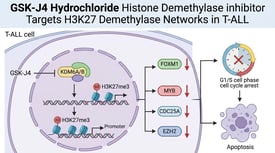
However, more recent efforts have yielded highly selective inhibitors like GSK-J1 and its cell-permeable ester prodrug GSK-J4, which specifically target the KDM6 subfamily. Other notable inhibitors include the KDM4-selective compound ML324 and various pan-KDM inhibitors that are being used to study the collective role of these enzymes in disease. A major challenge in the field is the high structural similarity of the catalytic pocket across the various JMJD subfamilies and other 2-OG-dependent enzymes, such as prolyl hydroxylases (PHDs). Achieving high selectivity is crucial to avoid off-target effects and systemic toxicity. Furthermore, the "context-dependent" nature of JMJD function—where some members can act as either oncogenes or tumor suppressors depending on the tissue—requires a deep understanding of the specific disease biology. Current research is exploring the use of JMJD inhibitors in combination with other epigenetic drugs, such as DNMT or EZH2 inhibitors, to achieve synergistic gene reactivation.
There is also growing interest in the role of JMJDs in regulating the immune microenvironment, suggesting that these inhibitors could be combined with immunotherapy to enhance anti-tumor immune responses. While most JMJD inhibitors are currently in the preclinical or early discovery stages, the increasing availability of high-resolution crystal structures and the development of novel screening platforms are accelerating the transition of these compounds toward clinical evaluation.