Caspofungin (MK-0991) Acetate (Caspofungin Acetate) targets (1,3)-β-D-glucan synthase in fungal keratitis
Copy code to add this image to your page
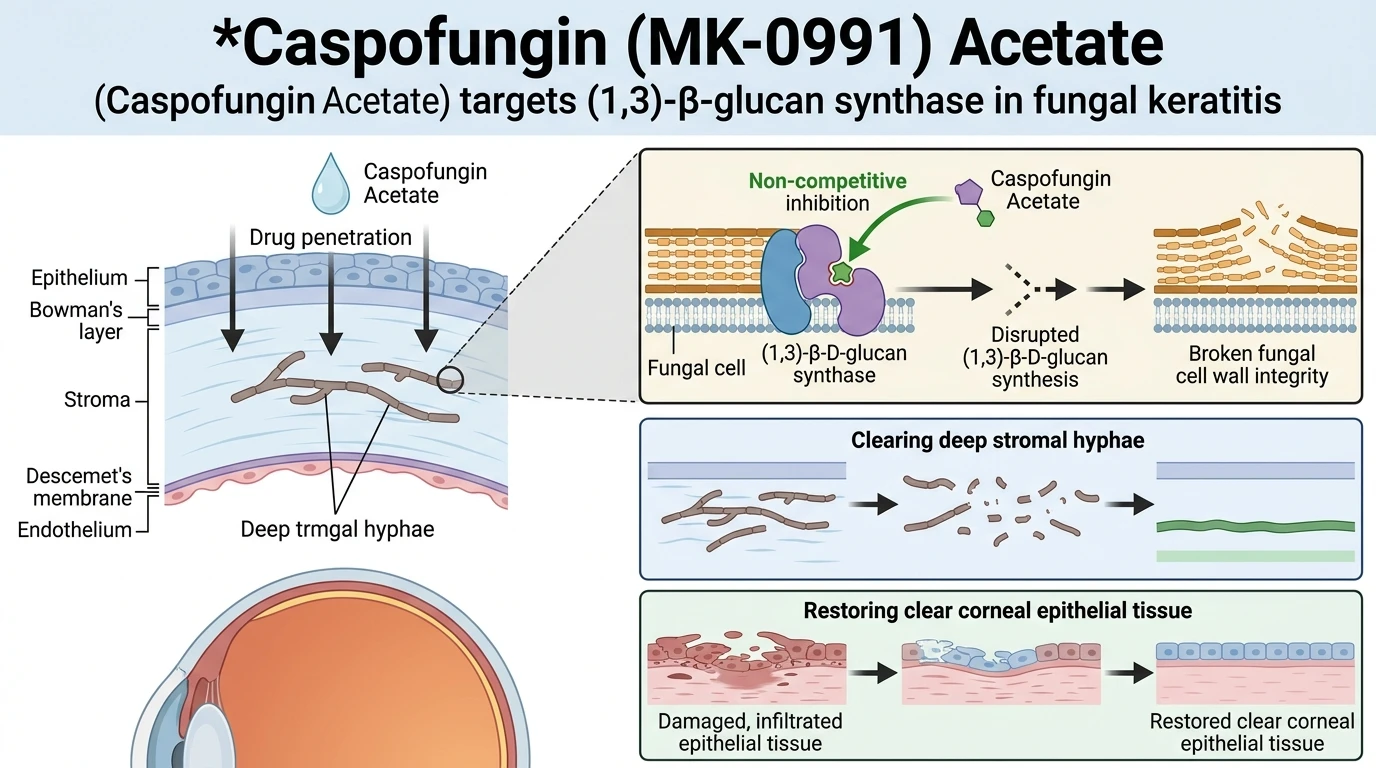
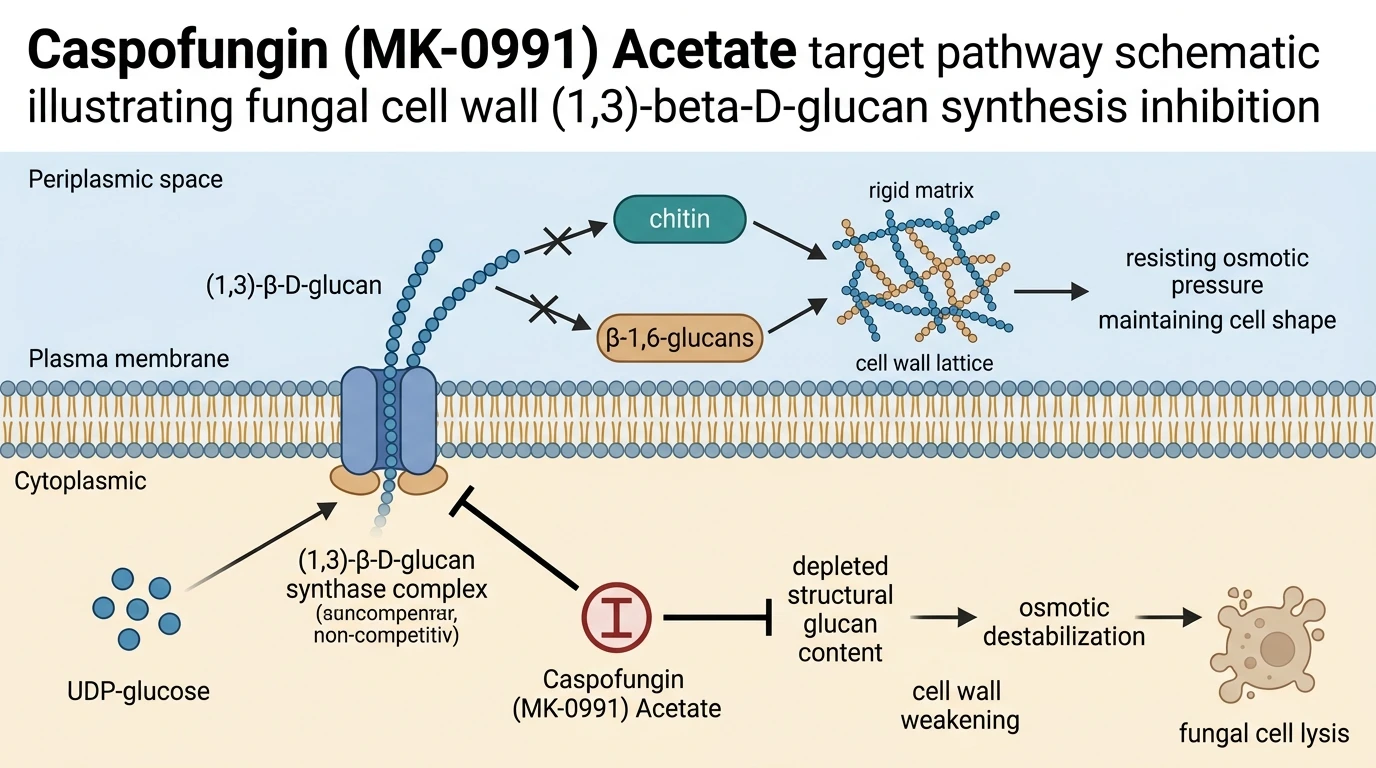
Fungal keratitis remains a major cause of ocular morbidity and vision loss, particularly when deep stromal invasion resists standard antifungal regimens. Fungal cell wall architecture relies fundamentally on (1,3)-β-D-glucan, a major structural polysaccharide synthesized by the transmembrane enzyme complex (1,3)-β-D-glucan synthase. Echinocandins, including Caspofungin (MK-0991) Acetate, selectively target this enzyme through non-competitive inhibition, disrupting polymer assembly without impacting mammalian cellular structures that lack cell walls.
Clinical management becomes particularly challenging when initial empirical regimens fail. In an illustrative case report, an 18-year-old male patient presented with severe corneal infection characterized by a dense 8x8 mm stromal infiltrate. In vivo confocal microscopy confirmed the presence of invasive fungal hyphae within the deep corneal stroma. The initial therapeutic strategy comprised combination therapy with topical natamycin 5%, topical voriconazole 1%, and systemic oral voriconazole. Despite multi-agent administration targeting ergosterol synthesis and cell membrane integrity, the lesion exhibited progressive therapeutic failure, with persistent stromal opacification and ongoing inflammatory tissue degradation.
To overcome treatment resistance, therapy was adjusted to off-label topical application of Caspofungin Acetate prepared as a 0.5% ophthalmic solution. Monotherapy drops were administered at hourly intervals. Early pharmacodynamic activity was documented within 3 days of initiating treatment, evidenced by reduced anterior chamber inflammation and focal stabilization of the infiltrative margin. The structural target, (1,3)-β-D-glucan synthase, underwent sustained inhibition under high local drug concentration, arresting active fungal cell wall synthesis. Over a 6-week treatment protocol, progressive re-epithelialization was achieved alongside total clearance of deep stromal hyphae, leaving only minimal residual scarring.
Post-treatment functional evaluation demonstrated substantial visual rehabilitation. The final corrected visual acuity reached 6/12 using a rigid gas permeable contact lens. This clinical outcome highlights the potential utility of topical echinocandins when polyene and azole classes fail to achieve bio-clearance. While systemic anti-infective profiling and target structural database records, such as those maintained for small-molecule kinase inhibitors and specific antimicrobial agents, document systemic target profiles, localized ocular application allows targeted delivery directly to the infected tissue while minimizing systemic toxicity.
Clinical Progression and Ocular Pharmacodynamics in Fungal Keratitis
Copy code to add this image to your page
Caspofungin (MK-0991) Acetate acts as a non-competitive inhibitor of the (1,3)-β-D-glucan synthase enzyme complex, disrupting the polymerization of UDP-glucose into essential structural β-glucan fibrils. Loss of (1,3)-β-D-glucan compromises fungal cell wall structural integrity, rendering the fungal organism susceptible to osmotic lysis and cell death without damaging host ocular tissues.
Rapid Re-Epithelialization Following Topical Echinocandin Administration
Topical application of Caspofungin Acetate 0.5% provided effective local bio-availability within the infected corneal stroma. Clinical observations recorded notable arrest of infiltrate extension within 72 hours. Epithelial repair progressed steadily. Polymerization of (1,3)-β-D-glucan ceased rapidly upon enzyme saturation. Deprived of essential structural polymers, fungal hyphae underwent cell lysis under ambient intraocular pressure gradients. Monotherapy administration at 1-hour intervals established therapeutic tissue levels while avoiding severe ocular surface toxicity.
Resolution of Deep Stromal Infiltrates and Visual Recovery
Complete resolution of the 8x8 mm corneal lesion was verified at 6 weeks post-treatment initiation. Confocal scanning confirmed total clearance of filamentous hyphae from the mid-to-deep stroma. Fibrotic scarring remained minimal. Visual acuity improved to 6/12 with rigid gas permeable lens fitting. Specialized formulations using Caspofungin Acetate represent a viable secondary intervention for refractory fungal keratitis cases failing conventional polyene or triazole therapy.