MLL Inhibitors
The Mixed Lineage Leukemia (MLL) protein, also known as KMT2A, is a crucial histone methyltransferase that plays a vital role in regulating gene expression during development and maintaining cellular identity. MLL is responsible for the monomethylation and dimethylation of histone H3 at lysine 4 (H3K4me1 and H3K4me2), marks that are generally associated with transcriptional activation and are critical for the proper expression of Hox genes and other developmental regulators. The primary signaling pathway involving MLL centers on its recruitment to specific gene loci by protein complexes, where it catalyzes the H3K4 methylation, thereby establishing an open chromatin state permissive for transcription. Aberrant MLL activity, most commonly due to chromosomal translocations that create MLL fusion proteins, is a hallmark of a significant proportion of infant acute leukemias, particularly acute myeloid leukemia (AML) and acute lymphoblastic leukemia (ALL). These MLL rearrangements lead to the constitutive activation of target genes, driving leukemogenesis.
Beyond leukemia, MLL alterations have also been implicated in other cancers and developmental disorders. The therapeutic targeting of MLL fusion proteins is a major focus in oncology. Inhibitors targeting the MLL complex, particularly those aimed at disrupting the interaction between MLL fusion proteins and their regulatory partners or inhibiting its enzymatic activity, are under active investigation. Currently, research is primarily in the preclinical and early clinical trial phases. Several strategies are being pursued, including inhibitors of the MLL-AF9 interaction, menin-MLL inhibitors, and compounds that target the catalytic activity of MLL.
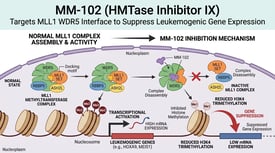
For example, menin-MLL inhibitors, which disrupt the interaction between the menin scaffold protein and MLL fusion proteins, have shown significant promise in preclinical models and are advancing into clinical trials. Research tools such as small molecules that inhibit the WDR5-MLL interaction have also been valuable. Key challenges in developing MLL inhibitors include achieving specificity for MLL fusion proteins over wild-type MLL, as complete inhibition of MLL could have developmental consequences. Furthermore, understanding the complex regulatory network surrounding MLL and identifying effective combination therapies to overcome resistance are crucial. The development of resistance, potentially through compensatory epigenetic mechanisms or mutations in downstream targets, is a significant concern.
Combination strategies, such as pairing MLL inhibitors with other leukemia therapies or epigenetic modifiers, are being explored to improve efficacy and broaden their therapeutic application.