4-PBA (Sodium Phenylbutyrate) Nitrogen Scavenging and Blood Ammonia Dynamics in CPSS
Copy code to add this image to your page
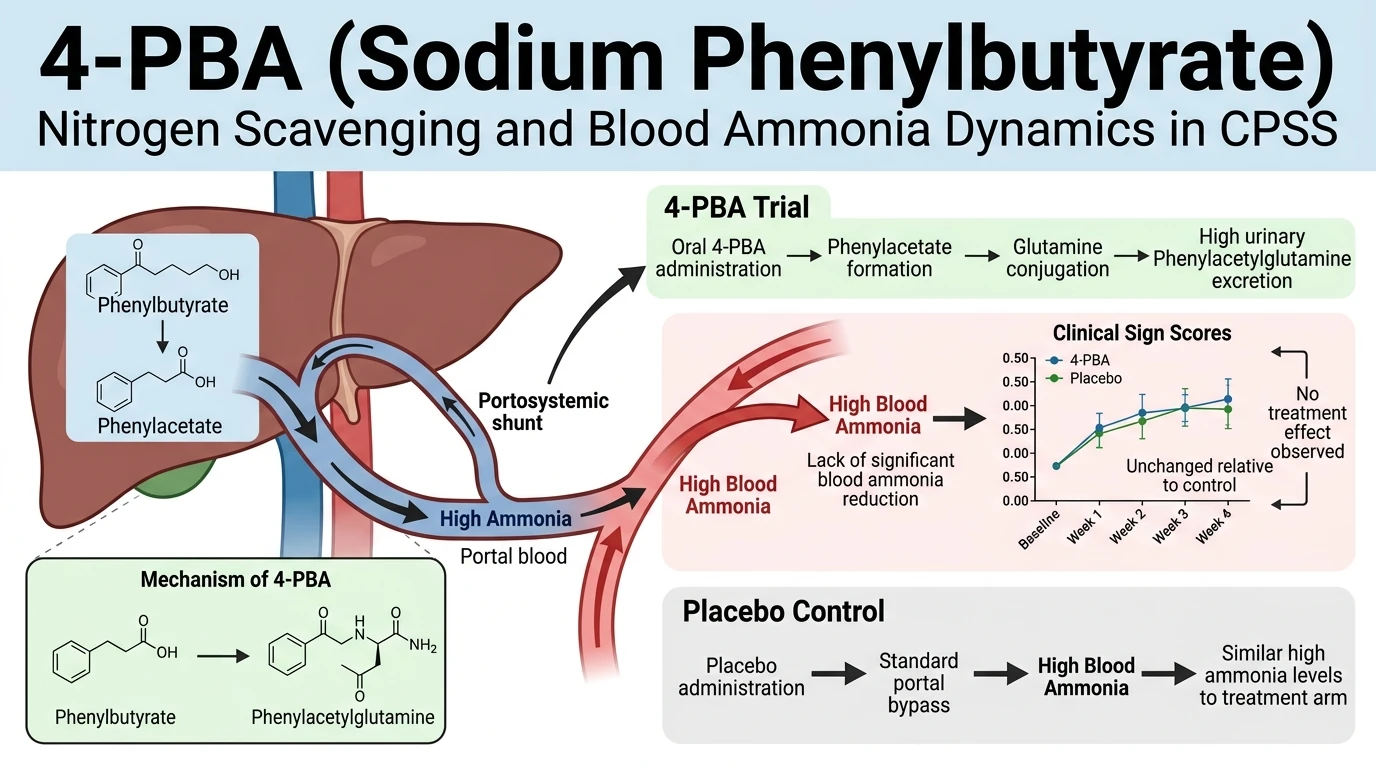
Hyperammonemia represents a critical clinical challenge in canine patients presenting with congenital portosystemic shunts (CPSS). In healthy mammalian physiology, waste nitrogen generated from amino acid catabolism is primarily detoxified through the hepatic urea cycle. Portosystemic vascular anomalies alter this metabolic architecture. Portal blood containing high concentrations of intestinal ammonia bypasses functional hepatic parenchyma directly into systemic circulation. This biochemical failure leads to neurotoxicity and hepatic encephalopathy. Alternative pathway agents aim to facilitate non-ureagenic waste nitrogen clearance. 4-PBA (Sodium Phenylbutyrate), an orally bioavailable prodrug, functions as a targeted nitrogen scavenger. Following systemic absorption, 4-PBA (Sodium Phenylbutyrate) undergoes rapid initial beta-oxidation to form phenylacetate. Phenylacetate subsequently enters mitochondrial compartments where it conjugates with glycine via N-acetyltransferase enzymatic activity. This conjugation reaction yields phenylacetylglycine (PAG). Phenylacetylglycine serves as a stable, water-soluble molecule that is rapidly eliminated through renal tubular excretion. Each mole of phenylacetylglycine excreted effectively removes two nitrogen equivalents from the metabolic pool. This pathway bypasses defective hepatic ureagenesis entirely. Consequently, 4PBA has long been considered a plausible therapeutic candidate for controlling systemic waste nitrogen accumulation in hepatopathic conditions.
To evaluate the therapeutic efficacy and safety of oral nitrogen scavengers under rigorous controlled conditions, researchers conducted a randomized, double-blind, placebo-controlled crossover trial in canine patients diagnosed with CPSS-induced hyperammonemia. The cohort comprised dogs with radiologically confirmed congenital vascular shunts exhibiting baseline elevations in blood ammonia. Subjects received treatment regimens consisting of sodium benzoate (SB), sodium phenylbutyrate (SPB), or a matching placebo over distinct 5-day evaluation blocks. Washout periods separated the treatment arms to prevent residual pharmacodynamic carryover effects. Investigators evaluated clinical sign scores alongside fasting and postprandial blood ammonia concentrations immediately prior to treatment initiation and at the conclusion of each 5-day arm. The study specifically sought to quantify whether 4PBA-mediated phenylacetylglycine formation translated into measurable reductions in circulating ammonia levels and concomitant attenuation of neurological symptoms within this defined veterinary population.
Empirical measurements revealed no statistically significant reduction in blood ammonia concentrations following oral 4PBA administration compared to placebo control arms. Baseline blood ammonia values exhibited high intra-individual variability across test subjects. Following 5 days of SPB administration, mean circulating ammonia levels remained statistically indistinguishable from values recorded during placebo administration. Furthermore, standardized clinical sign scoring metrics assessing neurological status, lethargy, and behavioral deficits showed no therapeutic superiority of 4-PBA (Sodium Phenylbutyrate) over placebo. Adverse events documented throughout the trial were minor, transient, and self-limiting. Observed toxicities primarily consisted of mild gastrointestinal upset, including intermittent anorexia and nausea, which resolved without requiring treatment cessation or protocol modification.
The negative findings of this controlled crossover trial provide clear boundary conditions regarding oral nitrogen scavenging in canine CPSS. Although 4PBA possesses established biochemical activity in human urea cycle disorders, its pharmacodynamic translation fails in the context of canine portosystemic shunting. Several physiological factors likely contribute to this lack of efficacy. Canine hepatic beta-oxidation and glycine conjugation kinetics may differ substantially from human metabolic pathways. Furthermore, severe portosystemic shunting limits initial hepatic extraction of the prodrug, potentially blunting downstream phenylacetate generation. Oral bioavailability and first-pass hepatic biotransformation are compromised when portal venous blood is diverted away from hepatocytes. Consequently, the rate of phenylacetylglycine synthesis in shunted dogs may fall below the threshold required to meaningfully alter systemic waste nitrogen burdens. Based on these empirical trial outcomes, oral SB and SPB cannot be recommended for managing hyperammonemia in dogs with congenital portosystemic shunts.
Therapeutic Evaluation and Pharmacological Characterization of Nitrogen Scavengers
Copy code to add this image to your page
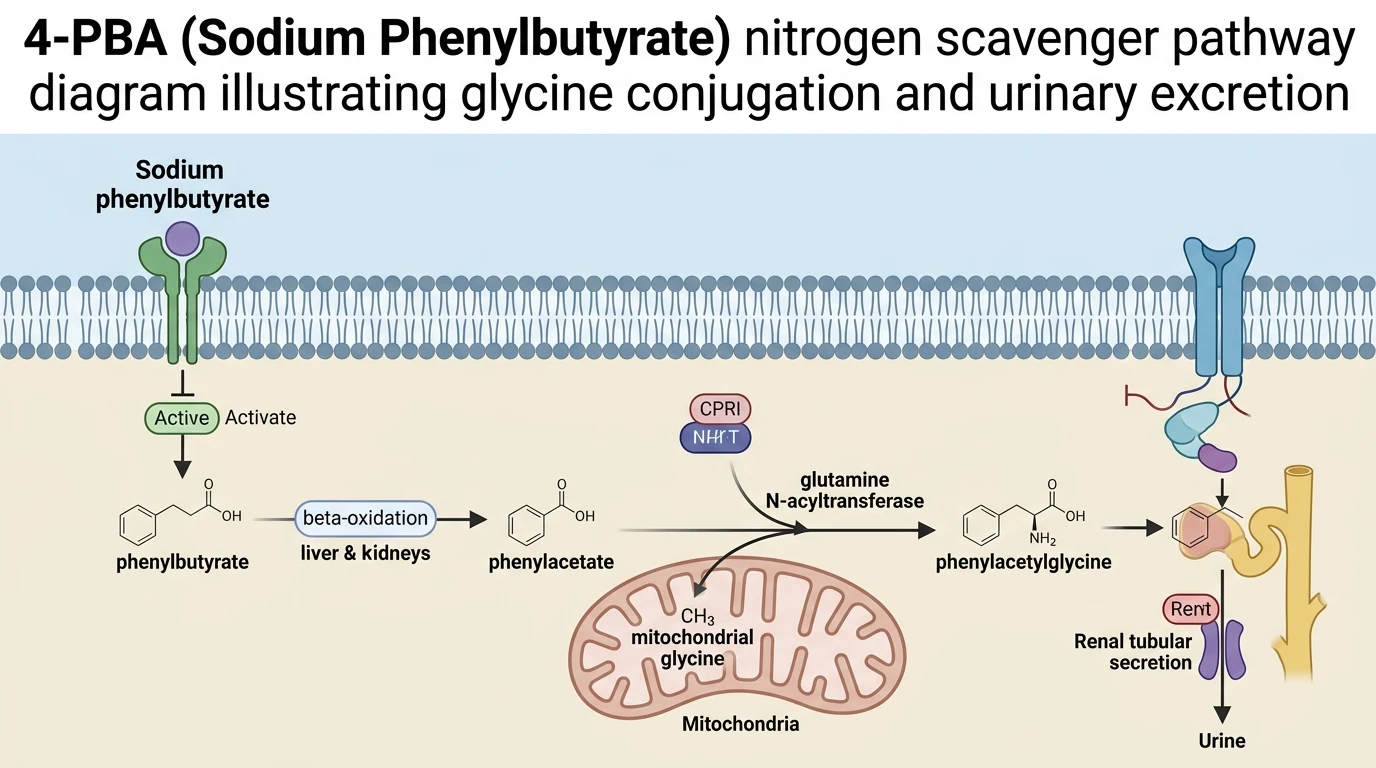
Sodium phenylbutyrate functions as an alternative nitrogen scavenger. Following absorption, SPB undergoes hepatic beta-oxidation to form phenylacetate. Phenylacetate then conjugates with mitochondrial glycine via glutamine N-acyltransferase, producing phenylacetylglycine (PAG). PAG is excreted in urine, removing two waste nitrogen equivalents per molecule independently of urea cycle enzymes.
In Vivo Efficacy Constraints in Canine Portosystemic Shunts
Systemic ammonia clearance requires efficient prodrug conversion. In this canine CPSS model, oral 4PBA failed to lower circulating ammonia levels. Portal blood diversion severely limits hepatocyte exposure to phenylbutyrate. Consequently, hepatic beta-oxidation rates remain sub-therapeutic. Circulating waste nitrogen concentrations showed no statistical deviation from placebo controls. Clinical scores similarly reflected an absence of therapeutic benefit. These empirical data establish clear boundary conditions for oral nitrogen scavenging in canine vascular anomalies.
Safety Metrics and Metabolic Clearance in Shunted Physiology
Adverse events remained mild and self-limiting throughout the crossover trial. Canine subjects tolerated 5-day dosing regimens of oral 4PBA without severe toxicity. Mild gastrointestinal disturbances occurred sporadically across all treatment groups. Renal excretion of conjugated metabolites proceeded without inducing secondary electrolyte imbalances. However, uncoupling nitrogen excretion from systemic ammonia reduction highlights key pharmacodynamic limitations. Without adequate hepatic biotransformation, urinary phenylacetylglycine clearance cannot offset ongoing enteric ammonia absorption.