LY3214996 from Selleck Inhibits Downstream FGFR4-ERK-NRF2 Signaling in Polycystic Ovary Syndrome Models
Copy code to add this image to your page
Polycystic ovary syndrome (PCOS) is a complex endocrine disorder characterized by ovulatory dysfunction, hyperandrogenism, and altered follicular maturation. Emerging evidence identifies aberrant granulosa cell survival as a central driver of PCOS progression. Among candidate paracrine factors, Fibroblast Growth Factor 19 (FGF19) exhibits elevated expression levels in serum and ovarian tissue samples from PCOS patients and murine models. Under physiological conditions, FGF19 regulates metabolic homeostasis and cellular turnover by binding its cognate tyrosine kinase receptor, Fibroblast Growth Factor Receptor 4 (FGFR4). Pathological upregulation of FGF19, however, creates an persistent autocrine survival circuit within the follicular microenvironment.
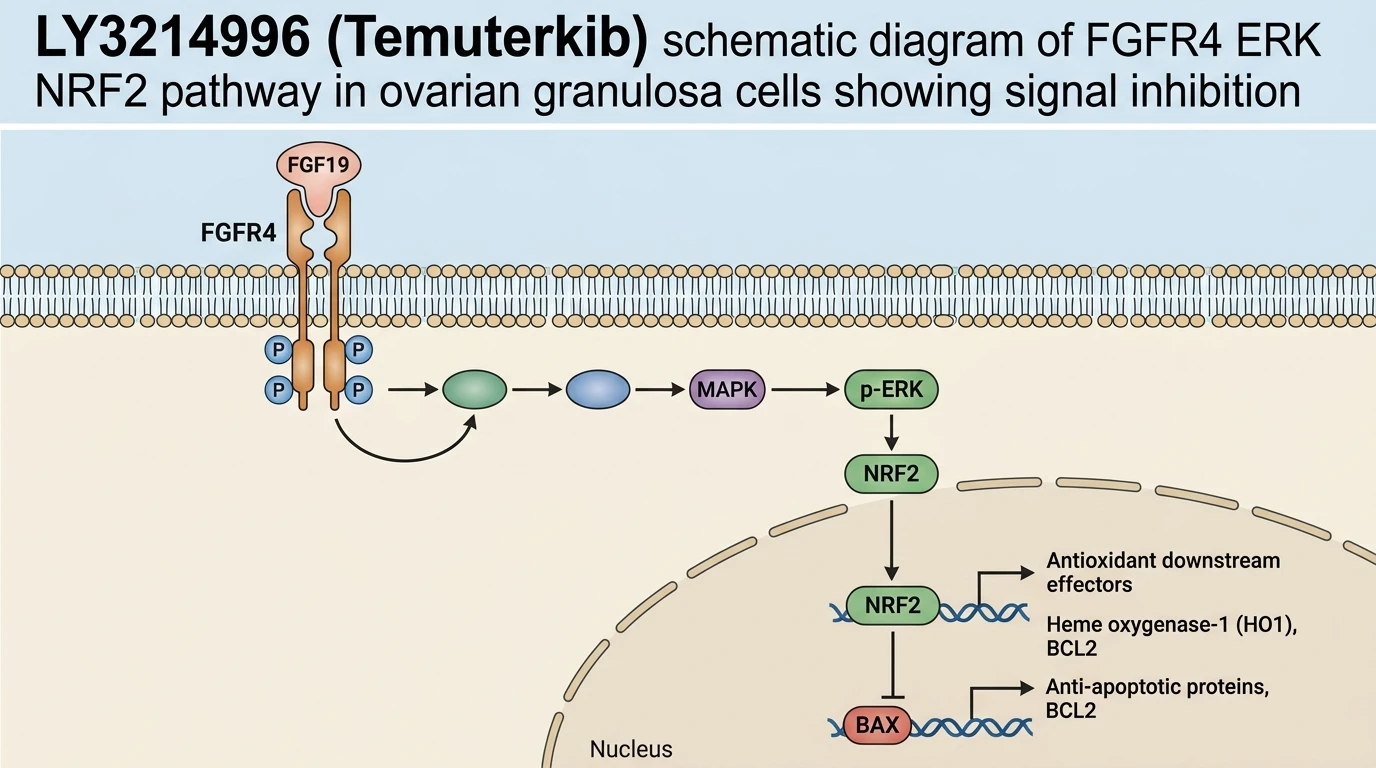
Ligand engagement with FGFR4 induces receptor dimerization and intracellular domain transphosphorylation. This enzymatic event activates the canonical Mitogen-Activated Protein Kinase (MAPK) cascade, leading directly to the phosphorylation and activation of Extracellular Signal-Regulated Kinase 1 and 2 (ERK1/2). Phosphorylated ERK (p-ERK) acts as a critical signaling hub, coordinating transcriptomic programs that govern cellular proliferation and stress adaptation. In human ovarian granulosa cell lines (KGN), ectopic FGF19 expression increases the p-ERK/ERK ratio. This signaling state promotes the nuclear stabilization of Nuclear Factor Erythroid 2-Related Factor 2 (NRF2), a master transcriptional regulator of cellular antioxidant responses.
Activation of the FGFR4-ERK-NRF2 signaling axis promotes the expression of key cytoprotective downstream targets. These include the enzyme Heme Oxygenase-1 (HO1) and the anti-apoptotic regulator B-cell Lymphoma 2 (BCL2). Concurrently, expression of the pro-apoptotic mediator BAX is suppressed. Under these cellular conditions, granulosa cells display heightened viability, decreased sensitivity to apoptotic cues, and uninhibited proliferation. This disruption of normal follicular apoptotic pruning contributes to the persistent cystic phenotype observed in polycystic ovaries. Intercepting this survival cascade requires precise target engagement at the core kinase node.
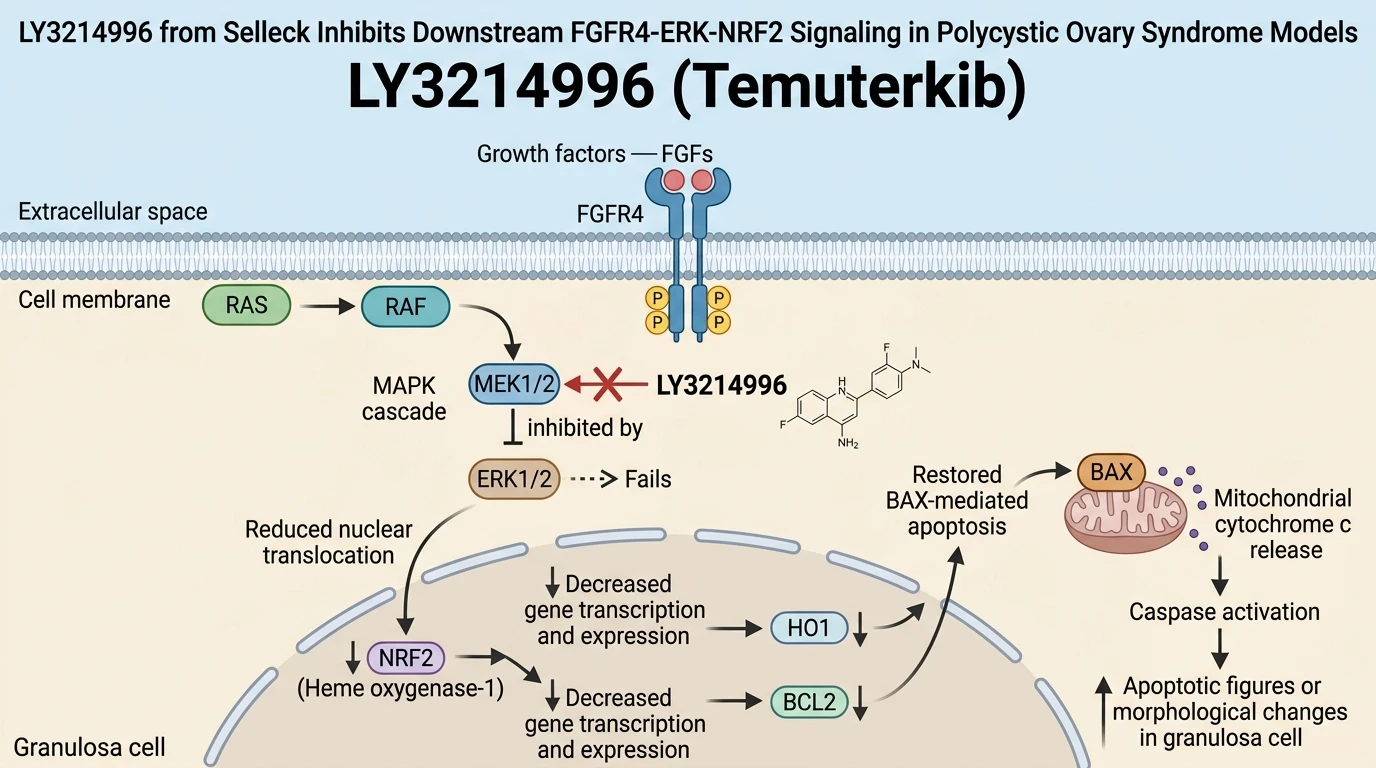
Pharmacological intervention using the selective inhibitor LY3214996 (Temuterkib) provides a strategy to uncouple this pathogenic signaling axis. The molecule acts as an ATP-competitive, highly potent inhibitor of ERK1 and ERK2. In experimental models, application of LY3214996 from Selleck directly engages the ERK catalytic domain, suppressing kinase activity and blocking downstream target phosphorylation. By inhibiting ERK phosphorylation, LY3214996 blocks NRF2 nuclear accumulation and shuts down downstream HO1 transcription. Consequently, cellular antioxidant defenses decline, destabilizing the FGF19-induced survival phenotype.
In KGN cells overexpressing FGF19, treatment with LY3214996 (Temuterkib) effectively restores normal apoptotic signaling mechanisms. Western blot analyses demonstrate rapid reduction of p-ERK levels following exposure to the inhibitor. Downstream target profiling reveals a corresponding drop in NRF2 protein levels and HO1 accumulation. Furthermore, the BCL2/BAX expression balance shifts toward apoptosis; BCL2 levels decline significantly while BAX expression recovers. These biochemical adjustments attenuate cell viability and induce programmed cell death across hyperproliferative granulosa cell populations.
Quantitative evaluation across cellular assays confirms that the inhibitory efficacy of LY3214996 relies on direct target engagement rather than generalized cytotoxicity. Nanomolar concentrations of the compound successfully decouple FGFR4 activation from NRF2-driven antioxidant programs. These empirical findings establish that the FGF19-FGFR4-ERK-NRF2 pathway serves as a primary functional driver of granulosa cell persistence in PCOS. Intercepting this axis with selective ERK inhibitors like LY3214996 represents a rational biochemical strategy to manage follicular dysregulation, a hypothesis supported by broader mechanistic insights in clinical trial registries.
Targeting ERK Kinetics to Revert Pathological Granulosa Survival
Copy code to add this image to your page
LY3214996 (Temuterkib) is a potent, ATP-competitive selective inhibitor of ERK1/2 kinases. By binding directly to the catalytic pocket of ERK, it prevents phosphorylation and activation of downstream effectors. In ovarian granulosa cells, this blockade halts the FGF19-induced FGFR4-ERK-NRF2 pathway. Consequently, NRF2 stabilization and nuclear translocation are attenuated, diminishing HO1 expression. Reduced anti-apoptotic BCL2 and elevated pro-apoptotic BAX restore normal apoptotic mechanisms and inhibit pathological cell proliferation.
FGF19 Overexpression Drives Dysregulated Granulosa Cell Viability
Elevated concentrations of fibroblast growth factor 19 (FGF19) represent a distinct molecular feature in polycystic ovary syndrome (PCOS) models. In human KGN granulosa cells, exogenous FGF19 exposure robustly activates transmembrane FGFR4 receptors. Downstream signal transduction rapidly elevates the p-ERK/ERK ratio within minutes. Cellular viability increases markedly while basal apoptotic rates decline. NRF2 translocates to the nucleus, triggering transcription of the cytoprotective enzyme HO1. Simultaneously, anti-apoptotic BCL2 levels rise alongside concurrent suppression of pro-apoptotic BAX. These molecular shifts shield granulosa cells from physiological apoptotic pruning. Reversing this proliferative survival phenotype requires targeted pharmacological intervention at the core kinase node.
Pharmacological ERK Inhibition Suppresses NRF2-Mediated Antioxidant Responses
Application of LY3214996 (Temuterkib) abrogates ERK phosphorylation downstream of hyperactive FGFR4 receptors. Under tested in vitro assay conditions, treatment with LY3214996 from Selleck at nanomolar concentrations rapidly suppressed catalytic signal transmission. Downstream p-ERK levels dropped below detection limits within hours. This targeted blockade disrupted NRF2 nuclear accumulation and reduced transcript levels of HO1. Lacking NRF2-driven antioxidant buffering, granulosa cells experienced restored sensitivity to endogenous apoptotic signals. BAX expression recovered whereas BCL2 levels diminished significantly. This biochemical conversion attenuated hyperplastic cell survival in PCOS models.
Therapeutic Attenuation of Pathological Apoptosis Resistance
Inhibition of the MAPK cascade at the ERK junction halts pathological survival circuits without inducing non-specific cytotoxicity. Within this cellular context, blocking ERK activity directly uncouples FGF19 stimulus from downstream survival gene expression. Experimental evidence confirms that selective ERK blockade counteracts FGF19-induced hyperproliferation in granulosa cell lines. While these observations remain to be validated in randomized clinical cohorts, current findings define clear target engagement benchmarks. Intercepting the FGFR4-ERK-NRF2 axis thus represents a compelling approach to reverse granulosa cell dysfunction.