MHY1485 mTOR activator Modulation of AMPK mTOR Axis in Sepsis Models
Copy code to add this image to your page
Polymicrobial sepsis remains a major cause of hyper-inflammatory responses, uncontrolled cytokine release, and rapid multi-organ dysfunction. In cecal ligation and perforation (CLP) rat models, parenteral administration of omega-3 polyunsaturated fatty acids (ω-3 PUFAs) exerts significant anti-inflammatory and organ-protective activity. The primary metabolic and signaling downstream architecture governing this protection centers on the AMPK/mTOR (adenosine monophosphate-activated protein kinase / mammalian target of rapamycin) axis. Understanding how exogenous lipid interventions modulate this intracellular cascade requires rigorous pharmacodynamic evaluation using specific targeted chemical probes.
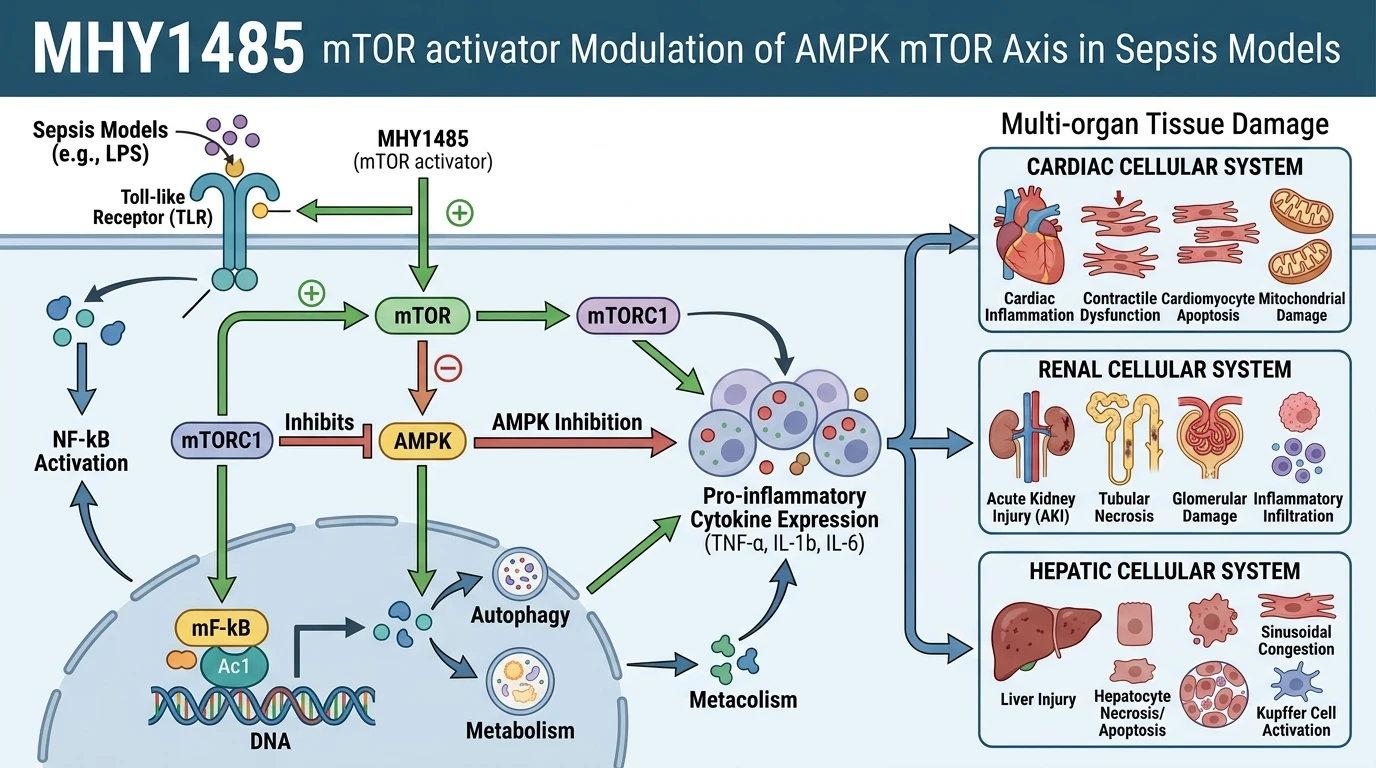
The small-molecule agonist MHY1485 serves as a direct mTOR activator, binding to and stimulating the mammalian target of rapamycin kinase complex. In experimental CLP septic models, parenteral administration of ω-3 PUFAs leads to robust activation of AMPK, which subsequently inhibits hyperactive mTOR signaling. This biochemical switch decreases downstream cellular protein translation, suppresses transcriptomic activity, and blunts systemic hyper-inflammation. However, when researchers co-administer the MHY1485 mTOR activator at a dose of 10 mg/kg, or alternatively employ the AMPK inhibitor Compound C, the therapeutic efficacy of ω-3 PUFAs is blunted.
Mechanistically, direct target engagement of mTOR by MHY1485 overrides the upstream inhibitory signals delivered by AMPK phosphorylation. The re-activation of mTOR reinstates inflammatory mediator synthesis. Systematic enzyme and cytokine profiling in CLP septic rats reveals that MHY1485 administration significantly restores circulating concentrations of key pro-inflammatory and immunomodulatory cytokines, including interleukin-1 beta (IL-1β), tumor necrosis factor-alpha (TNF-α), interleukin-6 (IL-6), interleukin-10 (IL-10), interferon-gamma (IFN-γ), and interleukin-17 (IL-17). These empirical measurements confirm that ω-3 PUFA-mediated suppression of hyper-cytokinemia depends directly upon maintaining mTOR suppression in this rodent context.
Beyond systemic cytokine balance, MHY1485 treatment accentuates acute tissue injury across multiple organ systems in the CLP model. Cardiac, hepatic, and renal tissues demonstrate pronounced physiological impairment upon pharmacological mTOR stimulation. Quantitative biochemical assays show that MHY1485 counteracts the organ-protective effects of parenteral ω-3 PUFAs, resulting in elevated serum levels of cardiac biomarkers such as cardiac troponin I (cTnI), creatine kinase (CK), and creatine kinase-MB (CK-MB). Simultaneously, markers of renal damage (creatinine [Cr] and blood urea nitrogen [BUN]) and hepatic hepatocellular injury (alanine aminotransferase [ALT] and aspartate aminotransferase [AST]) rise significantly.
These biochemical observations highlight the operational boundaries of the AMPK/mTOR signaling paradigm in septic pathophysiology. While AMPK activation acts as a metabolic brake on hyper-inflammation, MHY1485 enforces mTOR complex activation, demonstrating that mTOR activity directly drives inflammatory tissue injury in vivo. Consequently, MHY1485 serves as an indispensable pharmacological tool for uncoupling AMPK activation from downstream effector responses. By systematically reversing the anti-inflammatory and organ-sparing actions of parenteral ω-3 PUFAs, experimental studies using MHY1485 demonstrate that modulation of the AMPK/mTOR signaling network represents a primary therapeutic mechanism in acute polymicrobial models.
Pharmacological Characterization of AMPK and mTOR Crosstalk
Copy code to add this image to your page
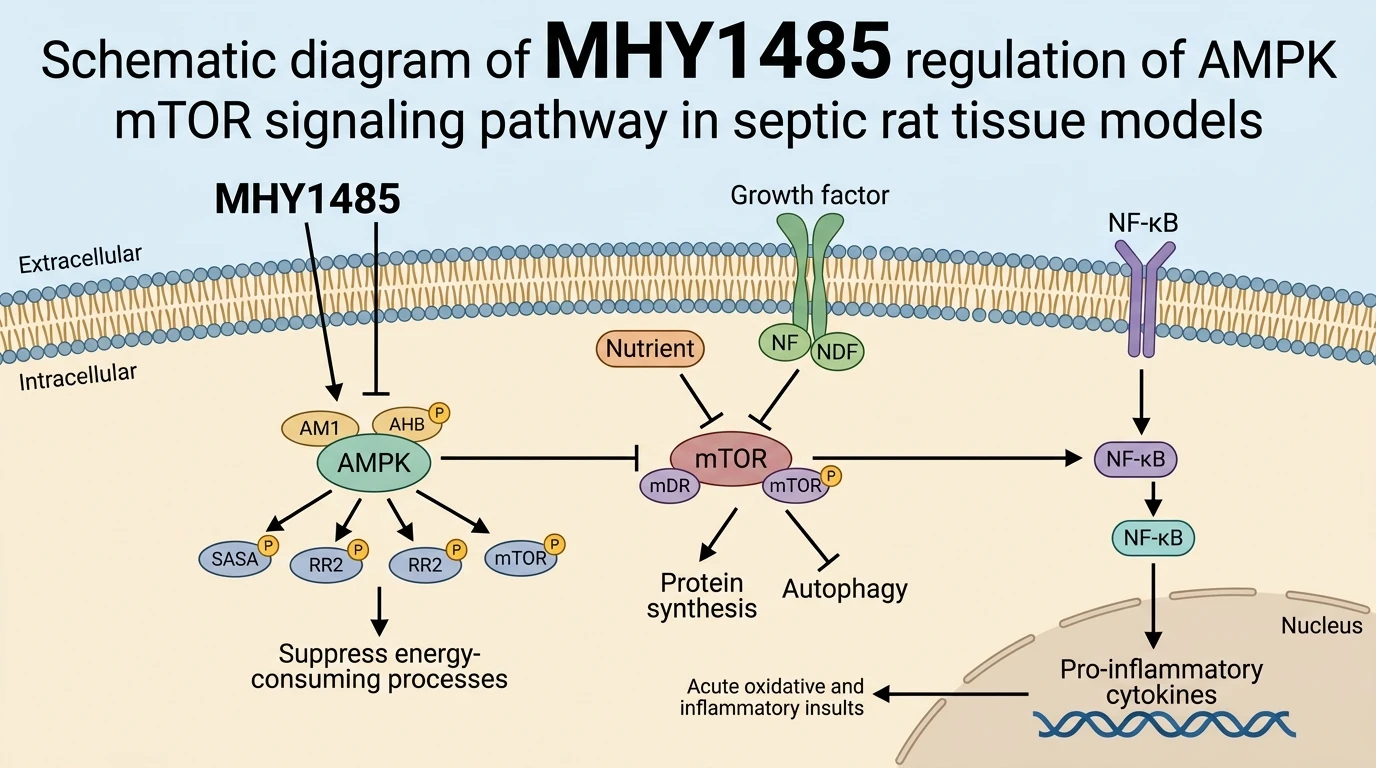
MHY1485 acts as a selective mTOR agonist, driving downstream mTOR complex activation to counteract AMPK-mediated inhibitory phosphorylation. In experimental sepsis, MHY1485 administration at 10 mg/kg directly reverses the protective effects of parenteral omega-3 PUFAs, restoring pro-inflammatory cytokine secretion (IL-1β, TNF-α, IL-6, IL-10, IFN-γ, IL-17) and escalating biomarkers of cardiac, hepatic, and renal injury.
MHY1485 Reverses Omega-3 PUFA Mediated Cytokine Suppression
In cecal ligation and perforation models, parenteral omega-3 polyunsaturated fatty acids suppress aberrant cytokine release. Administration of the MHY1485 mTOR activator at 10 mg/kg counteracts this anti-inflammatory action. Circulating cytokine concentrations shifted rapidly post-treatment. Serum concentrations of IL-1β, TNF-α, and IL-6 rebounded following mTOR activation; concurrently, IL-10, IFN-γ, and IL-17 profiles altered significantly within tested cohorts. These empirical observations establish that target engagement by MHY1485 bypasses upstream AMPK-mediated signaling, restoring inflammatory transcription downstream.
Reactivation of mTOR Restores Biomarkers of Organ Damage
Multiorgan damage represents a secondary endpoint in severe septic inflammation. Cardiac injury markers increased following pharmacological mTOR reactivation. Serum cardiac troponin I, creatine kinase, and creatine kinase-MB levels elevated significantly in MHY1485-treated septic rats relative to PUFA-only controls. Renal and hepatic markers showed matching degradation patterns. Blood urea nitrogen and serum creatinine concentrations rose rapidly. Concurrently, hepatic alanine aminotransferase and aspartate aminotransferase activities surged within hours. These measurements demonstrate that persistent mTOR activity exacerbates tissue damage across myocardial, renal, and hepatic tissues.
AMPK and mTOR Axis Modulates Sepsis Pathophysiology
Comparative evaluation utilizing Compound C and the MHY1485 mTOR activator validates the hierarchical control of the AMPK/mTOR pathway in sepsis. Inhibition of AMPK or direct agonist engagement of mTOR yields matching inflammatory phenotypes in vivo. Cell signaling nodes remained tightly linked under tested experimental conditions. By driving mTOR phosphorylation, MHY1485 overrides the protective signaling cascades initiated by parenteral lipid emulsions. Thus, targeted manipulation of this metabolic checkpoint confirms that suppressing mTOR kinase activity is necessary to preserve organ function during acute polymicrobial sepsis.