JNK-IN-8 from Selleck Inhibits JNK/NF-κB-Mediated NLRP3 Inflammasome Activation in ARDS Cognitive Dysfunction
Copy code to add this image to your page
Acute respiratory distress syndrome (ARDS) presents complex systemic pathophysiological challenges that extend beyond primary pulmonary dysfunction. Severe systemic inflammation triggered during ARDS frequently compromises the integrity of the blood-brain barrier, permitting peripheral inflammatory mediators to trigger central nervous system pathology. Microglial activation within the hippocampal architecture drives chronic neuroinflammatory cascades, leading to substantial post-recovery deficits in spatial learning and memory. Identifying central signaling nodes that govern this neuroinflammatory axis remains critical for developing therapeutic strategies aimed at mitigating ARDS-associated neuroinflammatory sequelae.
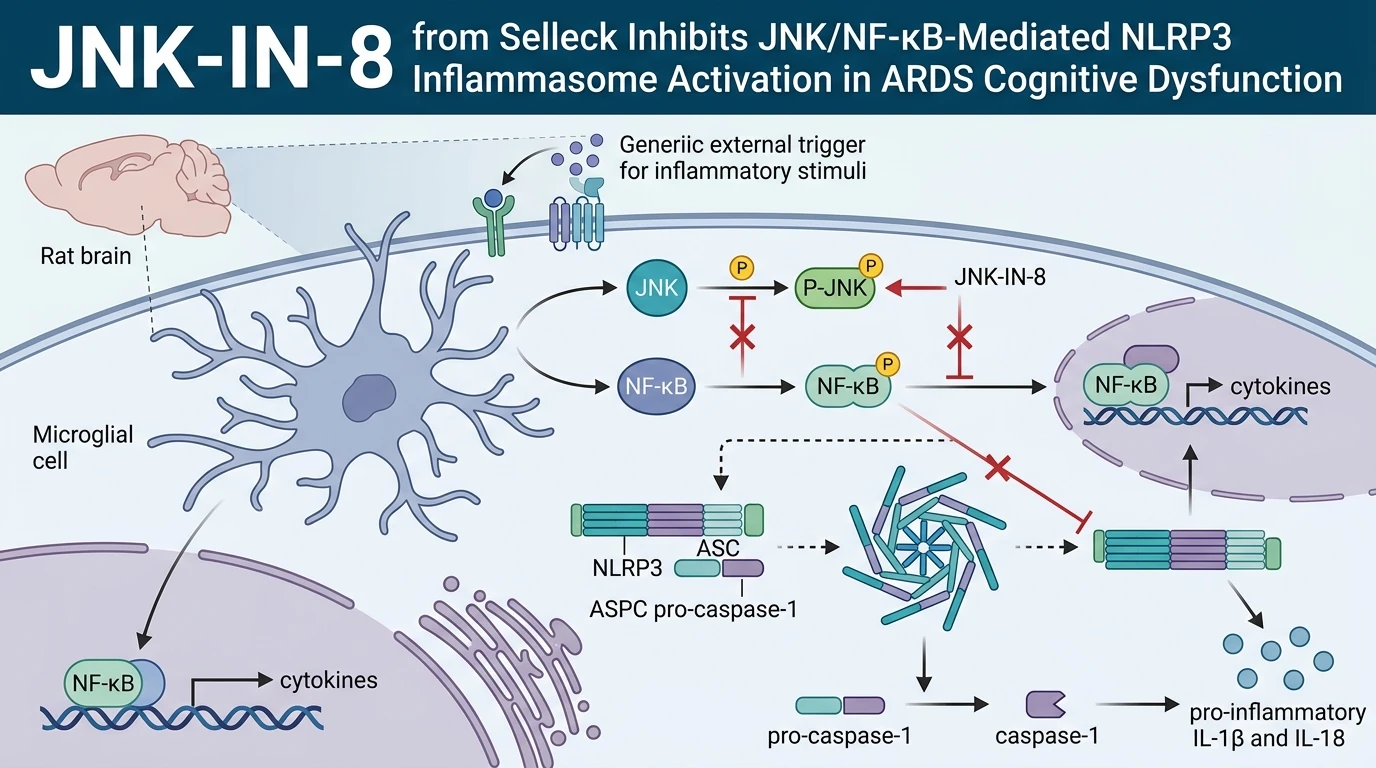
At the focal point of cellular stress signal transduction, c-Jun N-terminal kinase (JNK) acts as a pivotal regulator of neuroinflammatory response mechanisms. Upon activation by upstream MAP kinase kinases (MKK4 and MKK7), JNK phosphorylates transcriptional regulators including c-Jun and ATF2. This activation cascade operates in tight coordination with nuclear factor kappa B (NF-κB) pathways. Phosphorylation of IκB kinase (IKK) complexes leads to IκB degradation, enabling NF-κB p65 subunit translocation to the nucleus. Together, JNK and NF-κB act synergistically to upregulate expression of primary pro-inflammatory cytokines, specifically tumor necrosis factor-alpha (TNF-α), interleukin-6 (IL-6), and interleukin-1 beta (IL-1β), which maintain microglial populations in a neurotoxic phenotype.
Beyond cytokine production, JNK and NF-κB transcriptional cascades directly govern the priming phase of the NLRP3 inflammasome. The NLRP3 complex—comprising the sensor protein NLRP3, the adapter ASC, and the effector pro-caspase-1—serves as an intracellular platform for processing pro-IL-1β into its mature, secreted form. Pathological activation of this pathway in central glial cells accelerates synaptic loss and neuronal injury in hippocampal circuits.
The small-molecule compound JNK-IN-8 functions as a potent, ATP-competitive kinase inhibitor that covalently modifies conserved cysteine residues within the JNK ATP-binding pocket. By achieving durable kinase suppression, JNK-IN-8 blocks downstream phosphorylation events necessary for transcriptional activation of inflammatory genes. In experimental rat models of ARDS, treatment with JNK-IN-8 from Selleck effectively interrupted the feed-forward inflammatory cycle within hippocampal tissue. Attenuation of JNK phosphorylation directly reduced downstream NF-κB nuclear translocation, resulting in marked suppressions of microglial hyper-reactivity and inflammatory mediator release under tested in vivo conditions.
Crucially, pharmacological inhibition exerted by JNK-IN-8 extends to the secondary activation phase of the NLRP3 inflammasome. Lowering the cellular threshold of NLRP3 protein expression and preventingASC speck oligomerization reduces caspase-1 cleavage, limiting downstream neurotoxicity. These mechanistic actions correlate directly with preserved hippocampal synaptic integrity and restored performance in cognitive spatial testing protocols.
Pharmacological Targeted Inhibition of Central Neuroinflammation
Copy code to add this image to your page
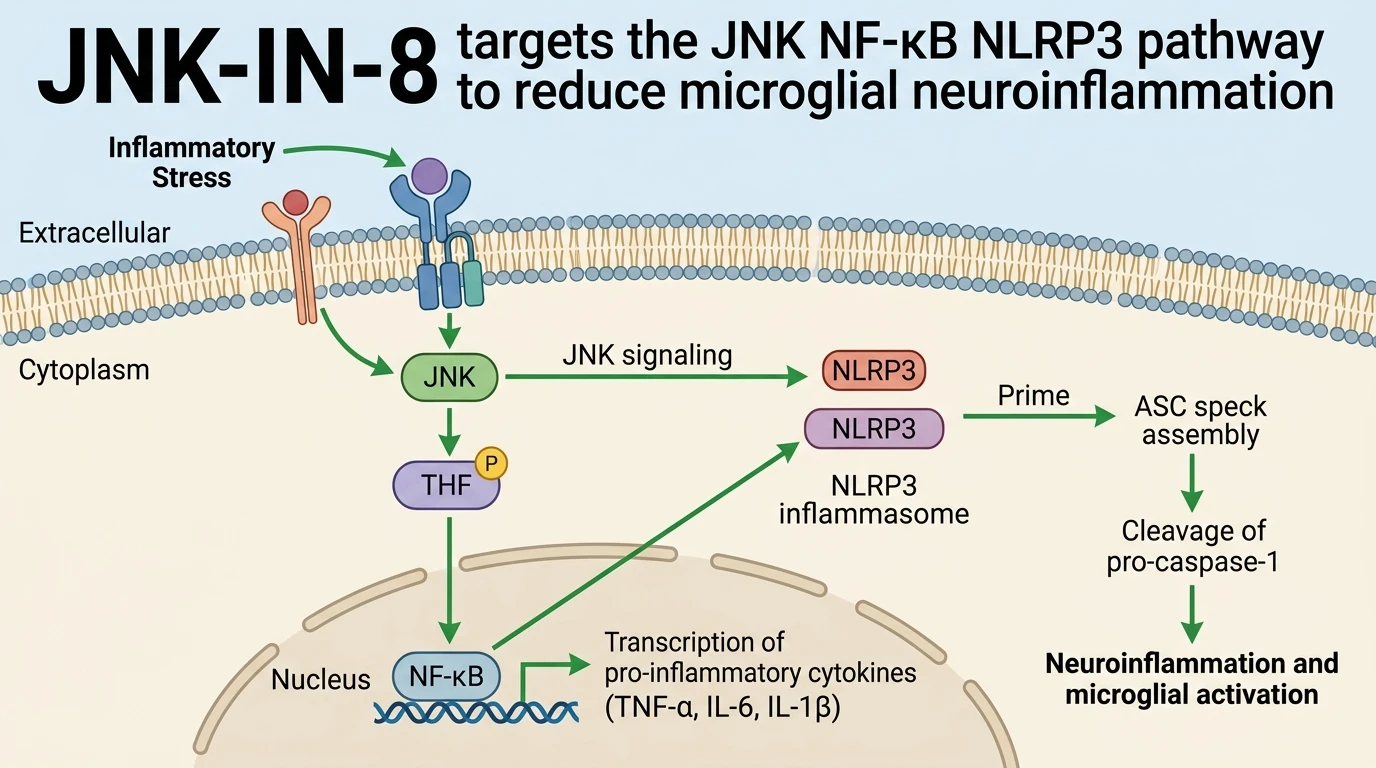
JNK-IN-8 attenuates neuroinflammation by blocking JNK and NF-κB phosphorylation, preventing microglial activation and cytokine secretion. This downstream inhibition halts NLRP3 inflammasome priming and cleavage of caspase-1, reducing neuroinflammatory injury and cognitive impairment in ARDS model rats.
JNK Inhibition Prevents Microglial Activation in Rats
Microglial reactivation drives acute neuroinflammation. In a rat model of ARDS, systematic administration of JNK-IN-8 significantly suppressed phosphorylation of JNK and downstream NF-κB p65 subunits within hippocampal tissue homogenates. Cytokine expression decreased significantly. Quantitative measurements revealed diminished transcripts of interleukin-1β, interleukin-6, and tumor necrosis factor-alpha following pharmacological intervention under tested conditions. Cognitive performance improved markedly. Behavioral testing in the Morris water maze demonstrated reduced escape latencies, indicating attenuated spatial memory deficits in treated rodent cohorts.
NLRP3 Inflammasome Blockade Restores Spatial Learning Capacity
NLRP3 activation governs neuroinflammatory progression. To evaluate whether inflammasome inhibition directly mediated cognitive recovery, researchers co-administered the potassium ionophore nigericin alongside JNK-IN-8 from Selleck in rat subjects. Nigericin restored NLRP3 assembly. Exogenous reactivation of the NLRP3 inflammasome completely reversed the cognitive protection conferred by JNK inhibition during behavioral assays. Target specificity remained clearly defined. These observations confirm that attenuation of ARDS-induced cognitive dysfunction requires JNK/NF-κB-dependent suppression of the NLRP3 inflammasome complex.