ML385 Nrf2 Pathway Blockade Attenuates Epithelial Protection Against Oxidative Stress
Copy code to add this image to your page
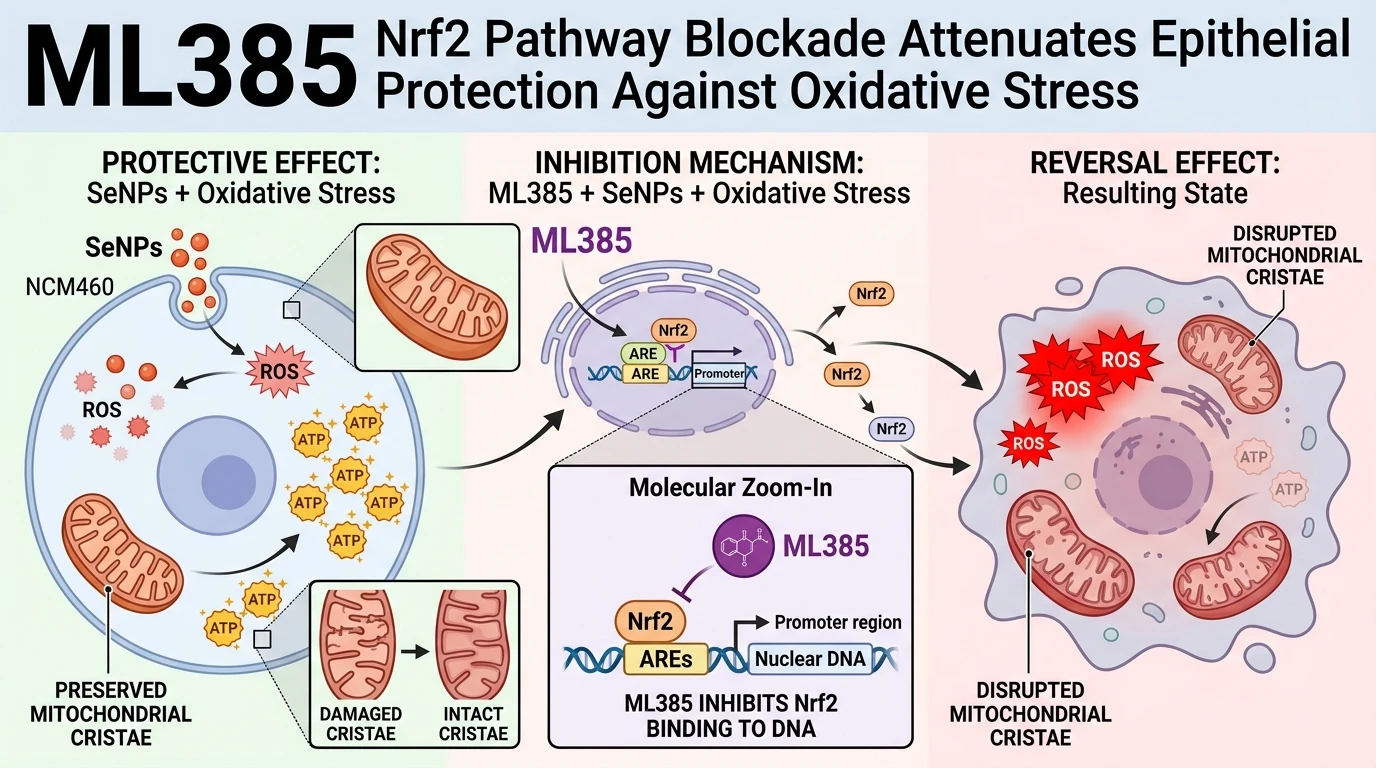
Intestinal mucosal barrier integrity relies on robust defense mechanisms against luminal oxidative challenges. Hydrogen peroxide (H2O2) exposure induces severe ROS accumulation in human intestinal mucosal epithelial cells (NCM460). This oxidative burden triggers mitochondrial collapse, evidenced by loss of mitochondrial membrane potential, depletion of ATP pools, and degradation of mitochondrial DNA (mtDNA) copy number. Ultrastructural evaluations reveal swelling of mitochondrial cristae and membrane disintegration under untreated oxidative stress conditions. Biogenic selenium nanoparticles (SeNPs) synthesized by Lactobacillus casei ATCC 393 demonstrate marked cytoprotective capacity against this cytotoxic cascade. Administration of SeNPs restores intracellular ATP concentration and preserves mitochondrial membrane potential. Furthermore, SeNP intervention protects mitochondrial ultrastructure and maintains mtDNA copy number within tested NCM460 cell assays.
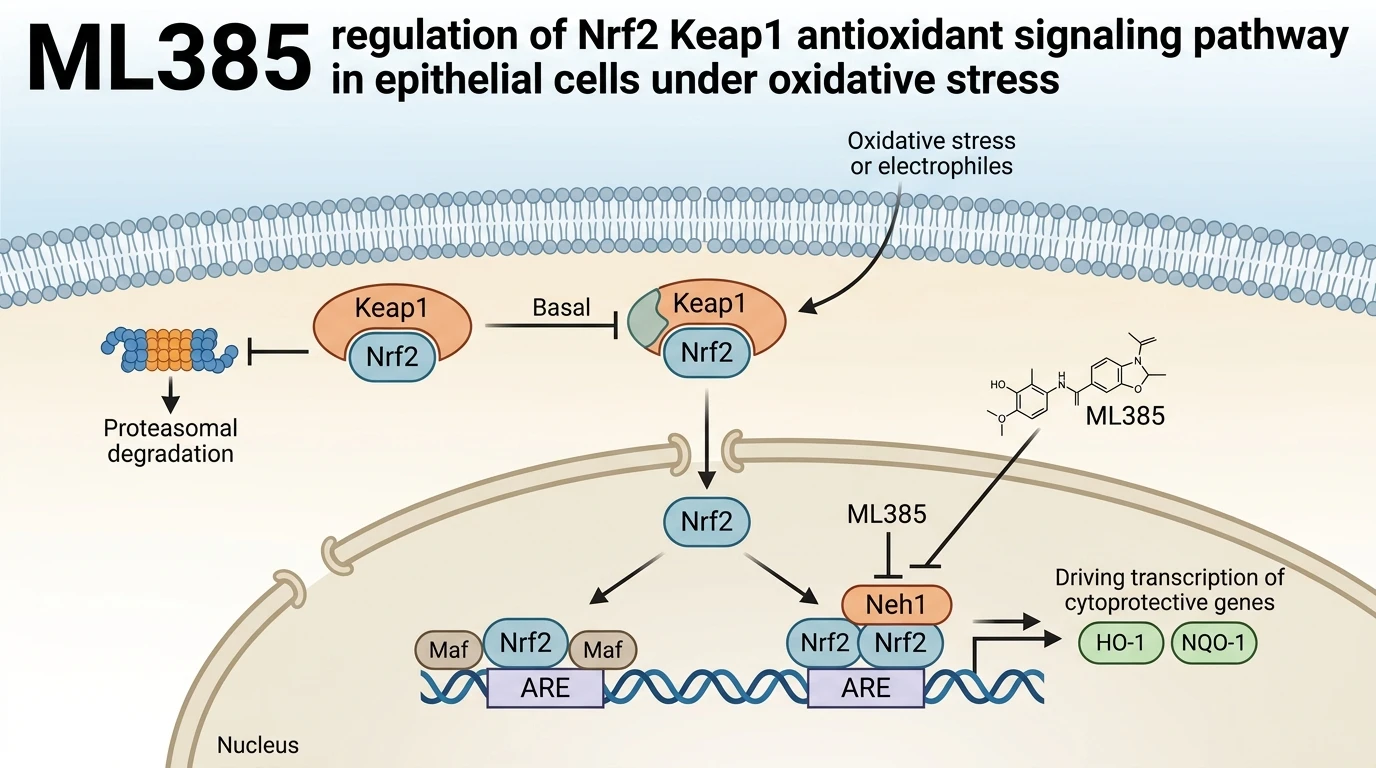
Mechanistically, the protective action of SeNPs depends on the Nrf2 (Nuclear factor erythroid 2-related factor 2) regulatory axis. Activation of Nrf2 drives nuclear translocation and subsequent binding to Antioxidant Response Elements (ARE) within promoter regions of protective genes. This transcriptional activation upregulates key downstream antioxidant enzymes, specifically heme oxygenase-1 (HO-1) and NAD(P)H quinone dehydrogenase 1 (NQO-1). To validate target specificity, pharmacological inhibition of Nrf2 is executed using the small-molecule antagonist ML385. By binding directly to the basic leucine zipper (bZIP) region within the Neh1 domain of Nrf2, ML385 prevents DNA binding to ARE sequences. In cultured NCM460 models, co-treatment with ML385 abrogates the upregulation of HO-1 and NQO-1 induced by SeNPs. Consequently, the ML385 Nrf2 blockade completely eliminates the ROS-scavenging and mitochondrial-protective effects of SeNPs, confirming Nrf2 as an indispensable node in probiotic-derived nanoparticle cytoprotection.
Pharmacological Characterization of Nrf2 Cascade Ablation
Copy code to add this image to your page
ML385 binds directly to the Neh1 DNA-binding domain of Nrf2, preventing Nrf2-small Maf heterodimer formation and ARE-driven transcription. In NCM460 epithelial models exposed to H2O2, ML385 blocks the activation of antioxidant downstream effectors HO-1 and NQO-1. Consequently, ML385 neutralizes the mitochondrial restoration and ROS scavenging mediated by biogenic selenium nanoparticles.
SeNPs Suppress H2O2-Induced Mitochondrial Dysfunction in NCM460 Cells
Oxidative damage rapidly degrades cellular bioenergetics. Exposure to H2O2 causes severe ROS accumulation in human NCM460 epithelial models. Cellular ATP levels drop precipitously following oxidant challenge. Mitochondrial membrane potential decreases rapidly, signaling early apoptotic entry. Treatment with biogenic SeNPs derived from Lactobacillus casei ATCC 393 prevents these catastrophic bioenergetic failures. Under tested in vitro conditions, SeNPs preserve mitochondrial ultrastructure and prevent cristae disruption. mtDNA copy number remains stable despite hydrogen peroxide exposure; this preservation correlates directly with normalized cellular ATP output.
ML385 Nrf2 Engagement Reverses Downstream HO-1 Upregulation
Transcriptional activation of cytoprotective networks requires unhindered Nrf2 nuclear binding. Small-molecule intervention with ML385 selectively engages the Neh1 domain of Nrf2. This binding blocks ARE promoter recognition directly. Consequently, transcription of antioxidant enzymes HO-1 and NQO-1 ceases. When applying the ML385 Nrf2 antagonist alongside SeNP treatments, the expected upregulation of downstream effector proteins fails to occur. Cellular ROS levels spike back to stressed baselines, confirming that SeNP-mediated mucosal protection operates strictly through an Nrf2-dependent signaling mechanism.